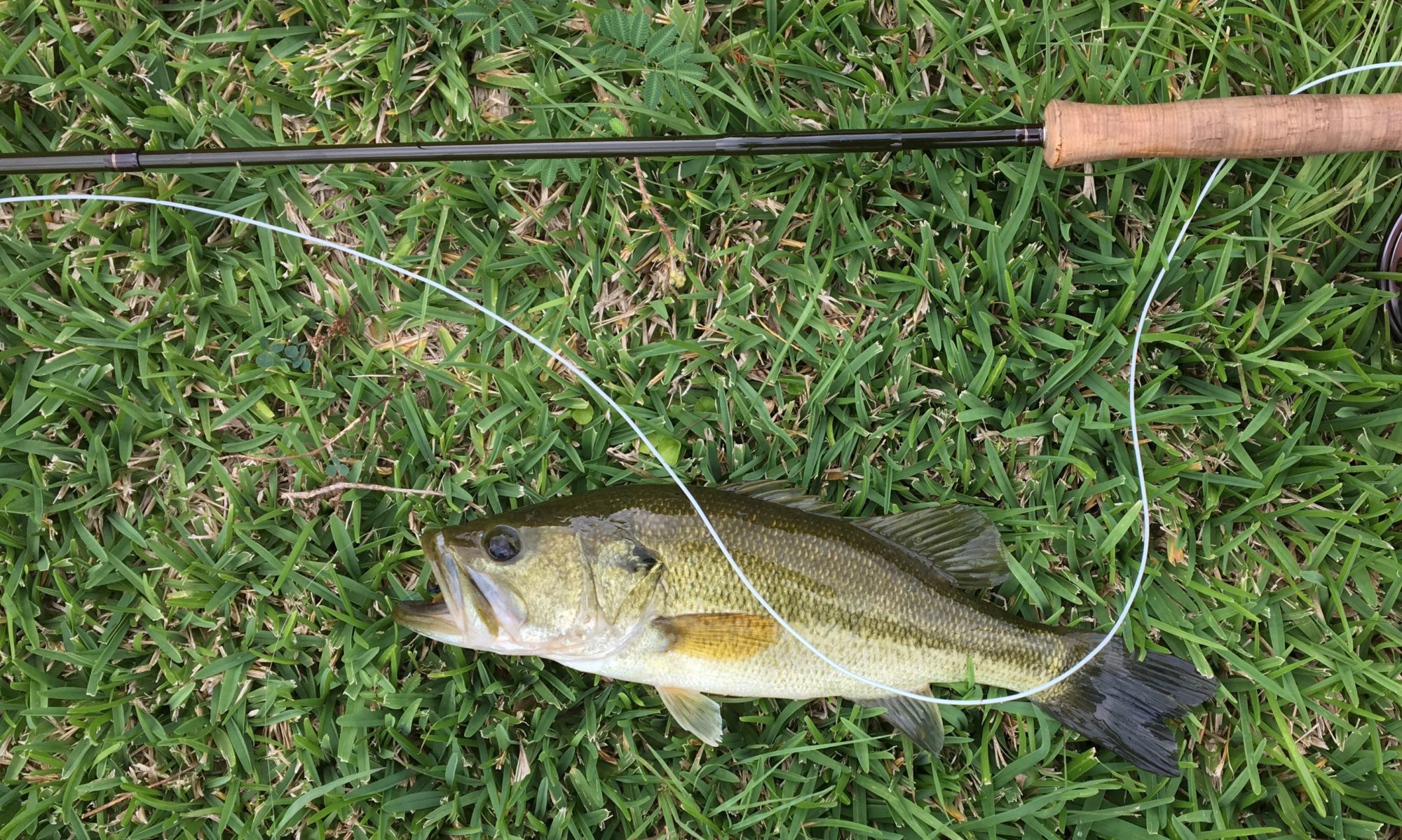


I didn’t choose New Jersey to be our 50th state. It was supposed to be Montana. Montana is a fly fishing Star in the East, a lodestone, a Mecca, and rightly so. Montana is blessed with beautiful rivers, beautiful fish, beautiful fly shops, and the kind of fishing stories about which fishing stories are written. New Jersey is . . . New Jersey.
I’ve felt guilty from time to time during the last year for not tidying things up, but as powerful a motivator as guilt may be, nothing happened. I didn’t plan to wait more than a year from catching my Montana fish, my 49th fish, until traveling to New Jersey. I went to plenty of exotic places during that year. I went to Belize, Quebec, Christmas Island, Mexico, the Bahamas, Scotland, and of course Texas . . . But not New Jersey. And I turned 70. I was supposed to be finished with this before I turned 70. I was going to start as a 62-year old youngster and totter into the finish before 70. In Montana.
I finally made plans to go to Jersey in October for the Northeast striped bass migration, right after my birthday in September.
The fish I had to fish for in New Jersey was a striper. New Jersey is a good striped bass destination–not as good, say, as Montana for trout or Kansas for bluegill, but it has its story to tell. There are also trout in New Jersey, and the trout streams are reportedly excellent. But the stripers! Among fly fishers it’s well known that Bruce Springsteen fly fishes for stripers in the surf along the Jersey shore, and that Rosalita was actually the name of a striped bass. Ok, maybe I made that part about Springsteen up.
While exiled to New York, our friend Phil Shook wrote The Flyfisher’s Guide to the Northeast Coast, which includes New Jersey.1 Phil was kind enough to send me a curated list of places to fish along the Jersey Shore. Mea culpa Phil, in the end I ignored it and we hired a guide, Zach Flake. I wanted no opportunity for failure.
But before I get to the fishing, first there’s some stuff about New Jersey qua New Jersey.

History, Population
New Jersey was originally settled by the Dutch in the 1600s, along with what is now New York as part of the New Netherlands. Its population quickly diversified, in a European sort-of-way, and following the Dutch came the Swedes and then the British . There was also religious diversity in a Protestant sort-of-way. Early New Jersey politics were power battles between Congregationalists, Quakers, and Scots Presbyterians masquerading as political parties. It just goes to show you, you get a bunch of religious folk in one room somebody is always going to discover heresy, even if the differences are inconsequential.
New Jersey is nestled between Pennsylvania, New York, and the Atlantic Ocean. It had little urban development until the 19th century. It was rural, agricultural, and a slave state. There weren’t big slave owners like the South, a farmer might own a few slaves to help work his farm, but in 1804 it was the last northern state to ban new slavery. It was also, by the way, the only Northern state to vote against Abraham Lincoln in both 1860 and 1864.

At the start of the Revolutionary War, Benjamin Franklin’s son William was the loyalist governor of New Jersey. During the war, after the Colonials were driven out of New York City, New Jersey was the site of a number of important battles, including the crossing of the Delaware for the Battle of Trenton.2 Then the war moved south, out of Jersey, out of the Northeast. I’d guess too much ice on the river crossings.
Modern New Jersey took its form with the Industrial Revolution, and by the Civil War immigrants had begun to flood New Jersey. In 1790, the Jersey population was 184,139. By 1860, at the start of the Civil War, the population was 672,035. After the War the population ballooned and hasn’t stopped growing. By 1900 it was 1.8 Million; by 1930, 4.04 million; and by 2025 it was the 11th largest state by population at 9,548,215. Between 1860 and 1930, New Jersey would grow at 25% to 35% per year.
By area it is a small state, 47th, but with 1,263 people per square mile, it is the most densely populated–the Census Bureau deems every New Jersey county urban (which makes it the only all-urban state). It is at the center of the Northeast Megalopolis. Unofficially, the area around Jersey City, directly across across the Hudson River from Manhattan, is not-so-jokingly considered the sixth borough of New York City, with easy access to Manhattan by bridge, rail, and ferry. It is relatively wealthy, second only to Massachusetts, with a median household income in 2023 of $99,781.

I read somewhere that New Jersey is still considered the place to go for the American Dream, and that Jersey City is the most walkable city in the U.S. Also, when I told Jersey friends and acquaintances that I was on my way to Jersey to catch a fish, they universally responded that it is beautiful. None of these things, opportunity, walkability, or beauty are the first things that come to mind when I think of New Jersey, and to the extent they are true, they still surprise me.
New Jersey’s population is diverse. As of 2025, 66.8% of the population is Anglo, 15.8% Black alone, 11.5% Asian alone, and 24% Hispanic. Twenty-four percent of New Jersey residents are foreign born.
Geology
The geology of New Jersey is just the completest thing.

It is so orderly, such a miniature of the geology of much of the East Coast. Next to the Atlantic there is a Coastal Plain, flat, prone to marshes, and relatively featureless. As the elevations rise from the coast, there is a Piedmont, literally a foot of the mountains. How can you pretend to be an Atlantic state without a bit of Piedmont? The Piedmont region actually follows the Atlantic Coast from Alabama north to New York. Florida and New England should be ashamed that they chose not to participate.
Then there are the Highlands and finally the Valley and Range. The Wawayanda Mountains are part of the New Jersey extension of the Appalachians, and are crossed by a segment of the Appalachian Trail. They were formed by the Grenville Orogeny about 950 million years ago.3
There is both a Great Swamp and the Pine Barrens. It’s small wonder that the geologically obsessed John McPhee came out of New Jersey, and that he wrote an early (and excellent) book about the Pine Barrens.4.
Politics
There are Republican counties in New Jersey, but like most states the most populous areas are blue. Kamala Harris carried New Jersey 51.97% to 46.06% in 2024, and Hillary Clinton got 55.45% of the vote in 2016. Both of its current senators, Cory Booker and Andy Kim, are Democrats, and New Jersey last elected a Republican senator in 1954. Only three of its 12-member Congressional delegation are Republican. A number of statewide officers–boards and commissions and what-not–are nonpartisan, but the highest offices, governor, lieutenant governor, secretary of state, and attorney general, are all Democrats. Both the state senate and house of representatives are majority Democratic.

In 2026, Corey Booker received more than 62% of the vote, and carried all but five counties in the state. Like the rest of the country in the 2026 midterm elections, people in New Jersey voted Democratic even more than usual, but it was never in doubt that Booker would win, and with big margins.
Music, Books, and Movies
New Jersey gave us a lot of fine writers. There are poets, William Carlos Williams (who could be from nowhere else) and Allen Ginsberg, There’s John McPhee of course. There’s Phillip Roth, Junot Diaz, Judy Blume, Harlan Coben, and George R.R. Martin. There are several great writers who weren’t born there, but who chose to live there: Walt Whitman, Joyce Carol Oates, and Toni Morrison. It’s a fine list, though I have to admit I’m too old to have ever read anything by Judy Blum. Maybe next time.
But where Jersey really shines is its music. There’s Springsteen, but there’s also Frank Sinatra, Yo La Tengo, Count Basie, Joe Pass, Lauryn Hill, the Roches, Sarah Vaughan, Tony Bennett, Paul Simon, Mary Chapin Carpenter, Bon Jovi, Connie Francis, The Shirelles, Twisted Sister, the Four Seasons, and Kool and the Gang, and that’s just a scratch on the surface. There are songs about New Jersey–what better song about a state could there be than Tom Waits’ Jersey Girl? Jersey Girl would make any state proud. The state’s music makes a great, inexhaustible playlist, and I found myself over the course of the year constantly adding to it and cueing it up again. It is a playlist that I can see myself listening to a year from now and still being thrilled by it. What a great thing to discover.
There are also lots of movies, though they tend to be of the gritty, organized and disorganized crime variety. Maybe The Sopranos5 best sums it up.
It’s probably time to listen one more time to Sinatra at the Sands with Count Basie.

- Phil Shook also wrote The Flyfisher’s Guide to Texas and The Flyfisher’s Guide to Mexico, both of which should live on your bedside table. At 82, Phil just finished a trip to the western coast of Australia for, among other things, baby black marlin. ↩︎
- You will note that there is no fly rod in that picture, and George Washington was never known to fly fish, which means crossing the Delaware Washington he missed a bet. Washington was though an ardent angler, and often carried a small pocket fishing kit. https://www.pa.gov/content/dam/copapwp-pagov/en/fishandboat/documents/about-us/angler-and-boater/angler-and-boater-2025/julyaugust2025_gwtackle.pdf ↩︎
- “Orogeny” was a word I had never encountered until we started going through the states, and from the first time I read it “orogeny” has confused me greatly. I have finally decided that its because I expect it to mean something more than it does, it’s such a big, official sounding term of art, but in truth the definition seems to be circular. Geologists throw in the term willy-nilly when mountains are formed by a plate smash-up, and orogeny is defined as a geologic plate smash-up that forms mountains. In simpler terms, you call mountains plate smash-up forming mountains an orogeny. What is an orogeny? It’s when mountains are formed by a plate smash-up. ↩︎
- McPhee, John (1978). The Pine Barrens. New York: Farrar, Straus and Giroux. ↩︎
- OK, not technically a movie, but it still sums it up. The King of Marvin Gardens, Atlantic City, On the Waterfront, and Palookaville are also in the mix. I’ve never seen Jersey Boys, but I hope when I do it will be as big a surprise as the playlist. ↩︎
