
Immediately after our weeklong Montana road trip, Kris and I made our second trip of the summer to Wyoming, this time into Yellowstone National Park. It was my third trip to Yellowstone, Kris’s second, and for me this trip was meant to take care of two bits of unfinished business: I wanted to stay at the Old Faithful Inn, and I had never caught a fish in Yellowstone.
When I first visited Yellowstone, circa 1961, I was five, and was probably better qualified as bait than a fisherman. Other than some state capitols and the Mormon Tabernacle, the Old Faithful Inn was likely the largest building I’d ever seen. It was certainly the most magnificent. We didn’t stay there.
I saw it again circa 1994 when our children were small, after having seen a lot more of the world, but it was still one of the most magnificent buildings I’d ever seen. We didn’t stay there that time either.


This time we spent the night, two nights actually. It was a bit more than $600 a night for a cramped room with a good shower and a cranky, sticking dresser. I hurt my hand when I tried to close the dresser drawer with a good whack. My hand didn’t take kindly to the whacking and the drawer remained stuck. Forcefulness is probably not one of my strong points.
I tell you the cost because of how disproportionate it was to the service. For $600 a night no one made our bed the second day, and there was nary a chocolate on the pillow. Towels dropped on the floor stayed on the floor. Still, after all the busloads of tourists were gone, you could walk into the Old Faithful Inn lobby and sit in a chair and have the view all your own, well, all your own along with a few dozens of others, but that was nothing like the hundreds of others packed into the lobby during the day. The next morning walking out of the hotel at seven I got to see Old Faithful serendipitously erupt. That stuff made the stay worth the money. Once.
Back to fishing.
At age 40 I had a midlife crisis and started tying flies. Over the long haul, going ahead and buying a Ferrari would probably have been cheaper, but of course I thought by tying my own flies I would save money. At least if I’d bought the car it would have been paid for by now.
I also started reading everything I could find about fly fishing. I read whole volumes with titles like Caddis! and Reading a Trout Stream! This was before the internet, when there were still books and magazines. The local Orvis store had shelves of fly-fishing books for sale. None of that reading taught me how to cast, or even how to cast better, but it did give me a good geography lesson as to where I was supposed to fish.

For most anglers then fly fishing was still principally about trout, with some salmon thrown in for exotica, and while Trout by Ray Bergman isn’t mentioned much now, it was then considered holy writ. It was first published in 1931, revised in 1951, and is allegedly one of the best-selling sports books ever published. It was not only impossibly long, 482 pages in the current edition, it was also dense, and even after I waded through I had poor notions of what Mr. Bergman was talking about.
I remember three things about the book. First, I was stupidly proud of finishing it, even though to me it was incomprehensible. I suppose I hoped finishing it would make me a better angler. It didn’t. I got a lot more angling advice out of the second half of War and Peace, though probably a bit less out of Heidegger’s Being and Time. They were both incomprehensible too, so there could well have been angling advice.
Second, illustrated color plates of flies are very pretty, and I can study them for hours. I mostly remember Trout for the pictures. Trout has a lot of mighty fine colored engraved plates, 17 or 18, and because Bergman was a completest, they included plates of pretty trout lures for conventional tackle. They didn’t include plates of cheese balls or salmon eggs.
Third, after finishing Trout, I really wanted to fish the Firehole River. The one substantive thing I took from Trout was that Bergman had fished the park when fishing the park was probably more exotic than fishing the Seychelles is now, and his descriptions of fishing park rivers were thrilling, almost religious experiences, or at least they caught a lot of fish. And the Firehole was his favorite and the most exotic of the lot.

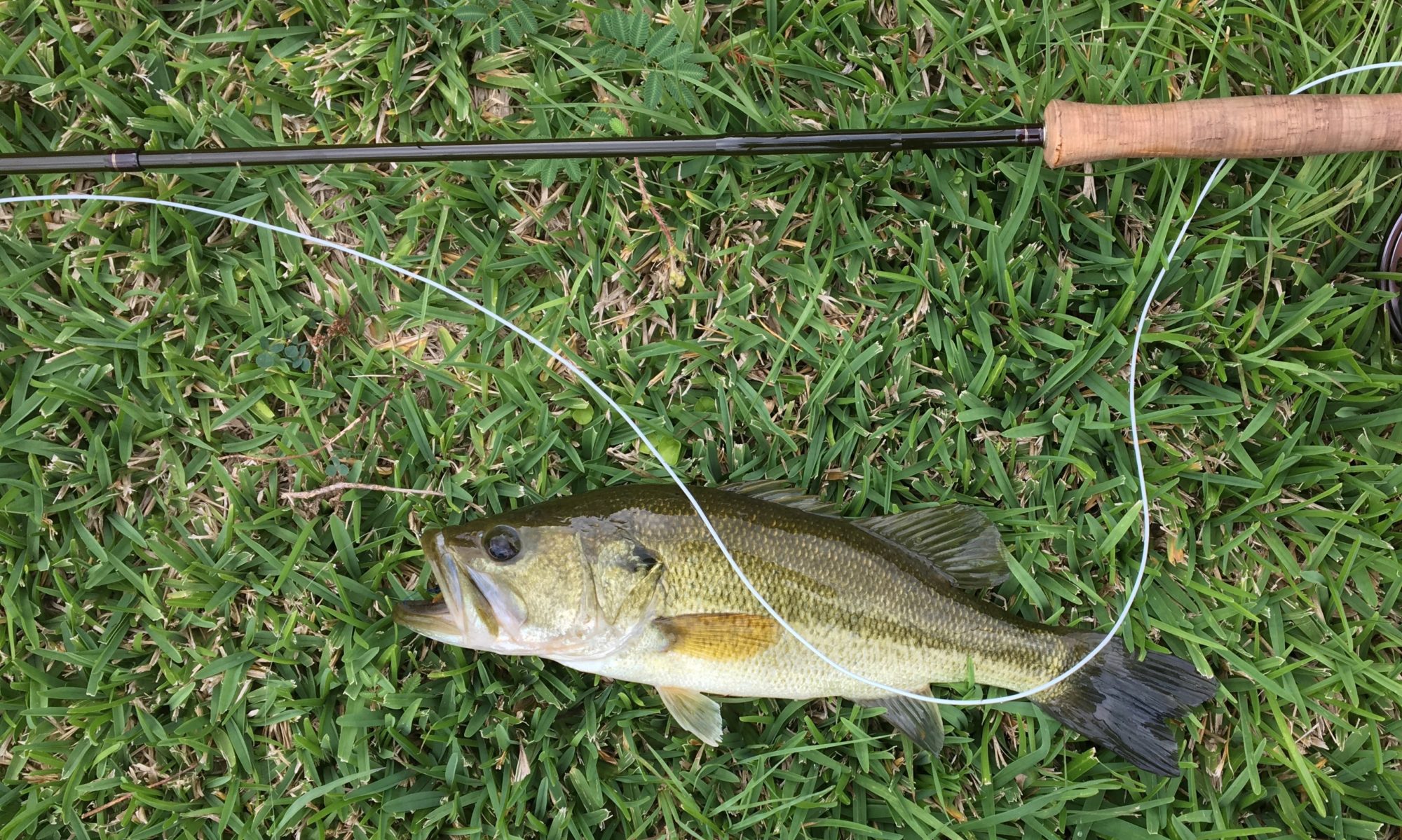
So on this trip we fished the Firehole, and then we fished the Gibbon and then Nez Perce Creek. We didn’t catch much. It sounds rushed, cramming three rivers into a single day, but it wasn’t. The three rivers are reasonably close together, and we drove some, walked some, and then fished each for a couple of hours. I caught two tiny trout, one non-native brook trout and one non-native brown, not much for all the effort and nothing of any size. Kris didn’t catch anything, but she would have fished the same river bend on the Firehole all day if it hadn’t been for an intrusive buffalo.
Away from the parking areas there were no other anglers, though we did keep seeing buffalo.
We had just spent five days fishing with Montana Anglers in Montana’s Madison River area, so we were both fishing pretty well. For Yellowstone we also hired a guide from Montana Anglers, Will Kyle. Boats aren’t allowed on Yellowstone Park rivers, so you have to wade, and on our pre-trip telephone call, Will asked us if we could hike a bit. I didn’t know what to tell him. I’m in reasonably good shape for an old guy, and Kris is tougher than me, but if Will was going to hike us ten miles into the backcountry we probably wouldn’t come home happy. Will was considerate though, and it wasn’t ten miles. It was a comfortable bit, way less than a mile, but once we walked away from the cars Yellowstone was a different place. There was nobody there but me, Kris, Will, and the buffalo.

We fished two dry flies all day, with a size 14 or so Parachute Adams trailing a larger indicator fly that looked to me like a size 10 or so Parachute Adams. You can’t go wrong with a Parachute Adams.
It’s rare any more to fish dry flies for a day, flies that float on the surface of the water. It’s not that it’s really harder to fish dry flies (though on the surface it’s easier to see your mistakes), but they are usually not so sure of catching fish. Fish take most of their meals underwater, not on the surface, and dragging a couple of nymphs underwater will more likely catch fish than floating a fly on the surface.
That said, dry flies are more fun to fish. They’re prettier, and seeing a trout break the surface and take a fly is as good as fly fishing gets. We were wading. We were fishing dry flies. We were seeing some fish. We were also in one of the world’s most beautiful places.

You always remember best the fish that you don’t land, and there was a moment when Will and I were standing on a bank above a dark pool watching my flies and saw a tiny bright trout — tiny? it was a monster! — shoot out of the dark, grab at my fly, and then disappear again without taking. We both laughed — shoot, I likely squealed with delight like a wee bairn. It was absolutely better that the fish was never hooked.
The Firehole flows through active geyser basins, and it gets its name from the steam rising from geysers and hot pots along the banks of the river. There are apocryphal stories about anglers catching a Firehole trout and then cooking it on the hook in a neighboring hot pot. Of course now the Firehole is all catch and release, so don’t do that.
The second river we fished was the Gibbon. The Gibbon was named after a member of the 1872 Yellowstone survey expedition, and it joins the Firehole and forms the Madison River at Madison Junction. The third stream, Nez Perce Creek, is named because in 1877 the Nez Perce led by Chief Joseph cut through the newly designated park on their run from the US Cavalry.
Sometimes in these late days I feel just a hint of what the Nez Perce must have felt when they took off from Oregon towards Canada. For the first time in my life I wonder from time to time why I stay in Texas, where we seem to be constantly striving for more than our allocated quota of meanness. I have always believed Texans to be inclined toward kindness and generosity and friendliness, but these days I’m not so sure.

And after seeing all 50 states, I’m more confused by us Americans than when Kris and I started. Still, having wandered for a day in Yellowstone, just watching the water with no greater aim than catching a fish, I do know this: We as a people did right with Yellowstone. We can have unalloyed pride in our absolute rightness when we formed the park.
I’m sure that someone could point out to me many times we as a people have done pretty good with other stuff, but I suspect that the times when we were absolutely right are not that common. There’s Yellowstone, the Emancipation Proclamation, the defeat of the Nazis in World War II, the First and Fifth and Fourteenth Amendments, the Clean Water Act, and maybe the Declaration of Independence. In those things we were as right as anyone anywhere has ever been.
Mostly though we muddle through, just like our ancestors muddled through, and when we do the right thing with the right will and humility in the midst of the muddle it should be celebrated and revered. Yellowstone is one of those places for celebration and reverence.
And maybe we catch fish, maybe not, but there is no better place to stand in North America than in the Firehole River, away from the crowds, watching tiny trout slap at flies floating on pure waters.
And now I’ve caught my Yellowstone fish. I surely hope that Caldera don’t blow before I get to go back there.
