The Native Fish Society

When I was reading about Oregon I didn’t find a conservation organization to donate to. There was nothing like the Tarpon and Bonefish Trust that reached out and gave me a good shake and said we’re doing good work. A week or so later I got one of the usual fishing emails,  this time from The Venturing Angler, announcing the Native Fish Society Native Trout-A-Thon in Oregon.

I looked at the Native Fish Society website, and they were what I had been looking for: a Pacific Northwest conservation organization for the protection of salmon, steelhead, and trout. They need to work on how easy they are to find on search engines, at least by random folk like me.  I sent them some money, and they promised to send me a ball cap. I am now a member of the Adipossessed Society of the Native Fish Society, clipping of the adipose fin being the marker for hatchery fish. Adipossessed. Cute.

If I had been willing to donate $5,000, the Society would have sent me a C.F. Burkheimer custom spey rod inscribed with “Native Fish Society Lifetime Member.” That seems like a pretty reasonable price for a Burkheimer Spey rod, but alas, I have no current need.

I can always use another ball cap. 

From the 2016 Native Fish Society Annual Report. 

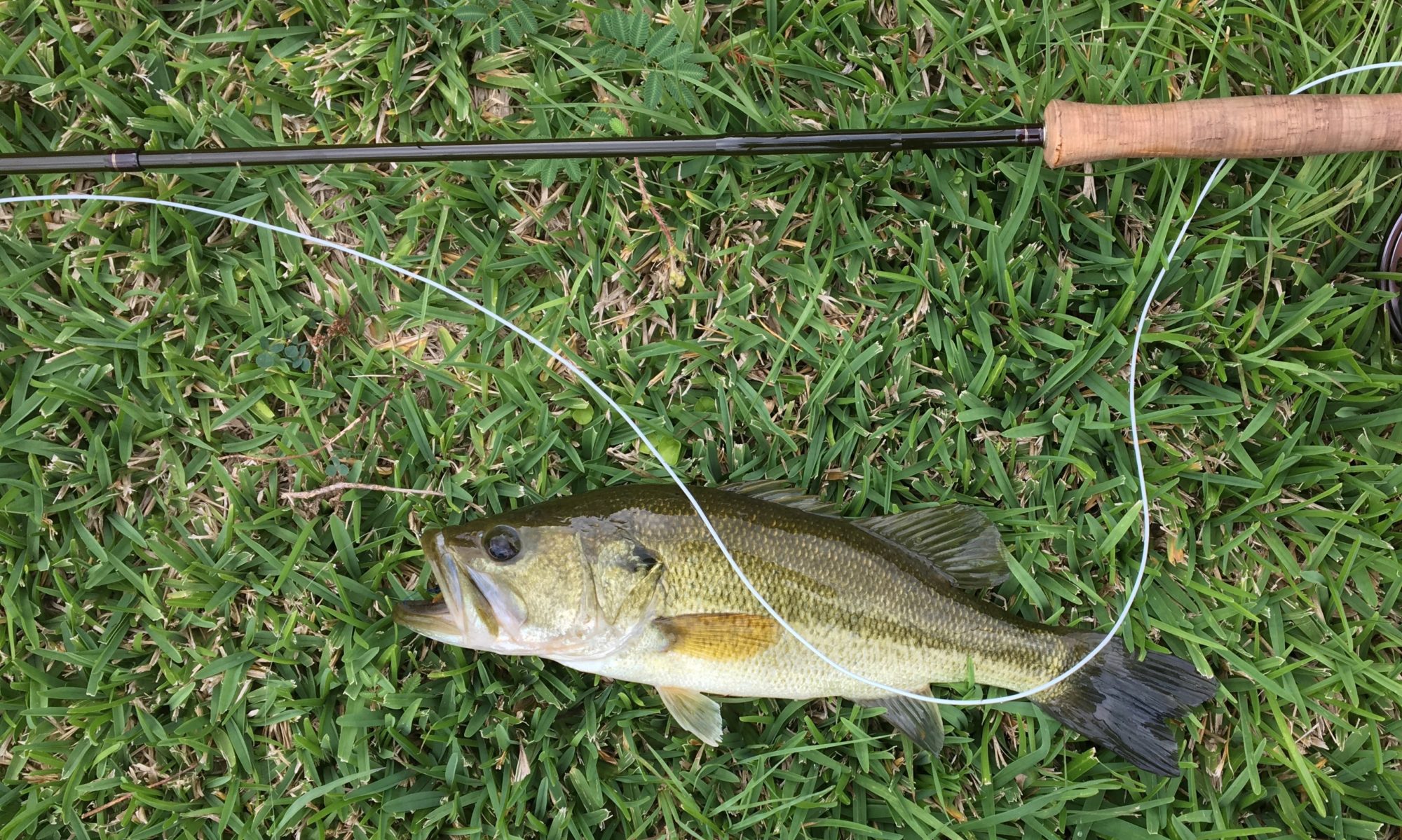
Meanwhile in Houston it’s the prettiest time of year, which could only be better if the Astros were in the World Series. This morning I went out early to hand out push cards for a neighbor who’s running for Congress–his mother had called and asked if I’d work the polls for early voting, and how can you turn down someone’s mother? It was in the mid-50s, and clear and bright and excellent people watching. By the afternoon it was in the 80s and I went out and fished for largemouth at Damon’s. Lately I’ve started each bass trip with whatever fly was successful the last time (unless it was lost in the trees) and then moving on if that’s not working.  Today I moved on to a dark blue and black Clouser, which never works. Today it worked, I think because the water was clear with the cooler weather and in the bright sun the dark color was the thing, maybe. In any case, what’s more fun than casting to a particular fish then watching it take, whatever the fish?


Fly Fish Oregon Done

Last Sunday we met our guide, Travis Johnson, at 4:30 in the morning, waders on, and got back to the hotel that night at 9:20. It was a long day. Most of our days in Oregon were long days. Up early, fish until lunch, nap for a few hours then fish again until dark. Long days.

We spent the next three nights at a riverside camp on a trip put together by Louis Cahill of Gink & Gasoline, through Jeff Hickman’s Fish the Swing.  I’d signed up for the camp on a whim, because steelhead was the right color of fish for Oregon, and there was a personal invitation, addressed to occupant, in my emails. Kris was a bit startled that I’d signed her up for a group camping trip on a river with a latrine tent and no blow drier, but I swear I told her first. I think I told her first.

The food was great, and the company great. Hickman wasn’t there, but there were two boats of three anglers each and two guides, Barrett Ames and Curtis Ciszek, and Curtis’s good dog, Rowlf. And no one is nicer than Louis Cahill. The weather wasn’t the bitter cold we’d expected north of the Mason-Dixon after Labor Day, though people did make fun of our expedition wear. Who says four layers are too many for 60 degrees? That’s damned cold.

I learned two Spey casts, more or less, the double Spey and the snap-T. By the end of the week every 10th cast or so was ok, and every 20th cast I might shoot three or four feet of line.  Spey casting, mastered. I was only frustrated at that point, as opposed to deeply frustrated, or even exasperated.  Kris was pretty much exasperated, but she hung in, and got more casting instruction than is really good for anyone. She might have been happier (and just as effective) if the guides had left her alone to flail away, but she was game, and mostly patient.

The first day with Travis Johnson was upriver, south of Maupin.  Oregon has a split personality, with east of the Cascades dry, and the lush west landscaped by rain and the ocean. Technically on the Deschutes we were in Central Oregon, but it was east enough. When I first saw the east side, mostly treeless, pristine, arid, it looked enough like my childhood home to be familiar. It was comfortable.

As I said, the first day we fished a bit upriver, south of Maupin, which if you let that sink in is all wrong. Like the desert in the east, the Deschutes runs north, the wrong way. Upriver south, downriver north. Forest west, desert east. The lower Deschutes is north. No wonder Oregon has such a peculiar reputation.

Johnson is the reigning world champion Spey-caster, but he may also be the reigning world champion talker. From dark to dark he had a constant stream of great stories and strong opinions ranging from Ireland to Maupin and back again. Johnson somehow managed to weave the Northern Ireland prime minister into instructions on drift. It was almost as spectacular as the scenery.

Oregon has a peculiar history. In the decades after Lewis & Clark, the relatively new United States pushed expansion into Oregon to keep the British out. Britain and the States agreed on a 49th parallel border in 1846, and the Canadian border from Washington to North Dakota is artificially straight, designed by treaty not geography. Settlers came from New England and the old Ohio Territory, and the existing residents, the Yakima and Nez Perce and Umpqua, the lot of them, were killed, pushed out, or confined. Oregon was re-settled by white people. It wasn’t just any white people, either.  It was pretty universally British Isle-descended white people,

Interestingly, Wisconsin was settled at about the same time by the same Yankees, but with the addition of Germans, Norwegians, and other such foreign folk. The conflict in Wisconsin between Catholic beer-drinking Germans and Protestant temperance-pledging Yankees was defining, but I’m pretty sure the beer drinkers won.  Oregon, on the other hand, remained relatively isolated until World War II, the automobile, and television changed everything.  It’s still 87% white though (as is Wisconsin, interestingly enough). Oregon’s greatest novel (and one of our greatest novels), Ken Kesey’s Sometimes a Great Notion, constantly riffs on its characters’ casual racism. They must have brought it with them over the Oregon Trail, because the Oregon population is still only 2 percent African American, less than 2 percent Native American, and less than 5 percent Asian. White people.

Where we camped and fished on the lower Deschutes (that’s the north end of the river; keep up), there had been a 70,000-acre fire in July that had destroyed the grass-cover and most of the river trees.  Without ground cover there was lots of dust when the wind blew, and by midday every day the wind was blowing. If it ever rains hard, there’ll be erosion and dirty water, but big rain doesn’t seem to be much of a problem. It was a prairie fire, and by next year the grass should be back.

Because it’s spring fed, the river flow is apparently pretty constant, season to season, year to year. The river is big, fast, and hard wading, horizontal rock-climbing, and neither of us could have done it without wading staffs and Patagonia river crampons. The river crampons worked, and the one morning we tried without them, with only studs in rubber soles, was scary. Notwithstanding their generally excellent performance and the Patagonia hype, when river crampons get caked with ash and dirt river crampons are not ultralight.

I caught a jack Chinook the first day, and three redsides rainbows over the next couple of days, and finally a steelhead on the third.  The small jack, three pounds maybe, was a bit like a Gulf Coast speckled trout. It was nice to see it, it was nice to get the Oregon fish out of the way, but after a bit of a flurry it seemed resigned to being caught. The redsides were pretty, wild, and genetically pure, and one was about 20 inches which I was told was about as big as they get. They were a bit overpowered by the 7 weight Spey rod though. The final steelhead was a hatchery fish with a clipped adipose fin, but it was big, 24 or 25 inches I’d guess, and it was every bit as hard to land as billed. Not many things are as good as billed.

Kris got a nice redside and some other things, a tiny pikeminnow and a sucker, so all in all it was a fine week. Oregon’s done.

Sex and Death

Chinook Salmon, U.S. Fish & Wildlife Service.

Once at Whole Foods I asked for salmon, and the fishmonger pointed out steelhead. I said steelhead aren’t salmon. He said yes they are. I said no they aren’t they’re trout and he said no, that wee little pale-fleshed thing over yonder is trout and that mighty steelhead right there is salmon. Things went on like that until I gave up, knowing full well I was right and he was wrong, but here’s the thing: I wasn’t right either. People more knowledgeable than me, people with their masters in science, often refer to steelhead (and sea-run cutthroats) as salmon.

Pacific salmon are genus Oncorhynchus, and depending on who you talk to Northwest Pacific salmon includes five major species, excluding Steelhead and sea-run cutthroats, or seven major species, including steelhead and sea-run cutthroat trout.  To make matters more confusing the Northwest Pacific salmon species, five or seven, are not that closely related to the Atlantic salmon, Salmo salar: Different genus, different species. Resident rainbows (which are never referred to as salmon), are Oncorhynchus mykiss, which of course is the same genus and species as steelhead. And the same genus as Pacific salmon . . .

Ocean Steelhead, U.S. Fish & Wildlife Service

It’s all very confusing, and to confuse things more there is also an Asian Pacific salmon species,Oncorhynchus masou. It’s been suggested that steelhead should be called Pacific trout, not Pacific salmon, because they can survive a spawning run and return to spawn again. Ok. That’ll sure clear things up, particularly since Atlantic salmon can also survive a spawning run and return to spawn again. Maybe steelhead should be called Pacific Atlantics.

The fly-fishing literature suffers the same confusion, but in reverse. It doesn’t ever call steelhead salmon, but it clearly distinguishes between steelhead and resident rainbows.  No angler would ever say “I’m fishing for trout!” when the angler was fishing for steelhead. No flytier would say “I’m tying up a bunch of intruders for trout!” For the fly fisher, trout and steelhead are day and night, night and day. Sort of. Anglers know that steelhead and rainbows are more or less the same, but they’ll never admit it. Steelhead are glamorous, and in comparison, even rainbows are not.

Spawning Steelhead, U.S. Fish & Wildlife Service.

Steelhead, like their kinfolk salmon, are that holiest of fly-fishing prey, an anadromous fish. That’s what makes steelhead different from the run-of-the-mill resident rainbow. You think permit are special? Tarpon? They ain’t in it. Oh sure, Ted Williams was proud of his 1000 bonefish and his 1000 tarpon, but it was his 1000 Atlantic salmon that were his first love. To heck with all that saltwater stuff. It’s anadromous fish plucked from a river that get the heart racing. It’s the best of both worlds.

Anadromous. Steelhead (like resident rainbows) hatch in the spring or early summer in the gravel of freshwater rivers, and then (unlike resident rainbows) work their way to the ocean. The steelhead’s genetic sibling, the resident rainbow, might reach five pounds. The ocean-dwelling steelhead, growing huge on ocean shrimp and baitfish, might reach 20 pounds. After two or three years of growing larger than inland rainbows, steelhead get romantic notions and go home to party. After spawning, salmon die. Steelhead don’t. Theoretically the same steelhead may make the ocean/river spawning trek several times, though only about 10 percent of the population survives for return trips. Of course instead of heading back to the ocean steelhead sometimes hang out in their home river and become resident rainbows. It’s a lifestyle thing.

Sockeye Salmon, U.S. Fish & Wildlife Service

The biggest differences between steelhead and the other five salmon, other than the whole sex and death business, is that steelhead feed in freshwater, unless of course they’re winter steelhead and then they don’t eat much. Steelhead also don’t run the river and spawn in one swift motion, unless of course they’re winter steelhead and then they don’t dawdle. Steelhead may (or may not) take their time, but those five-species salmon stop feeding when they start their spawning run, and they all move in and move up. Then the salmon, the five-species salmon, don’t ever go back to the ocean. Who hasn’t marveled at that  tragedy?  And what fly fisher isn’t a bit repulsed by the notion of a flesh fly?

So there are two distinct runs of steelhead. There’s the summer steelhead, the fish we’ll be fishing for in a bit more than a week. They’re smaller than the winter steelhead, they need a bit of time before they’re ready to spawn, and they feed in freshwater. They start showing up in rivers in May for the next spring’s spawn, and continue to come into the rivers through October.  They then hang out getting ready for the next spring spawn. I suppose that along about Halloween the summer steelhead by general accord stop and let the winter steelhead begin. Things are always precise in nature.

I have a mental image of the Oregon winter steelheader standing in the sleet and snow, spey-casting to a fish that isn’t interested. “During the winter I only work two days a week,” my imaginary steelheader tells me, “so I fished for 67 days last year and landed three fish. It was my best season ever.” He has a steelhead tattoo, and another of an intruder.  He doesn’t know that the Astros won the World Series.

Pink Salmon, U.S. Fish and Wildlife Service.

The winter steelhead have the same ultimate goal as the summer steelhead, but they’re bigger fish, physically ready to spawn, and they’re not lollygagging in the summer pools eating caddis or whatever. They have to be provoked into yelling the salmonic equivalent of get off my lawn.

That guy? That Oregon winter steelheader? Don’t tell him, but he’s salmon fishing.

Ephemera & Young, A, The Book of Salmon in Two Parts, frontispiece, 1850.

Eastern Grand Slam. May 16, 2018

Somebody somewhere serendipitously caught three different fish in a day and called it a grand slam, probably over beers that very evening.  Grand slam, of course, is a baseball term, meaning that one is spectacularly off the schneid.  It’s usually a tarpon, a bonefish, and a permit caught on the same day, but there aren’t a lot of places north of the Florida Keys to catch a tarpon, a bonefish, and a permit, so in Texas saltwater it’s a flounder, a redfish, and a speckled trout. For Western trout it’s a cutthroat, rainbow, brown, and brookie. For Eastern trout it’s the same sans cutthroat. It’s all nonsense, but it’s gratifying nonsense.

I caught a rainbow, brown, and brookie on the same Wednesday in West Virginia.  I caught the rainbow and the brown in less than 30 minutes after breakfast before we met Randall the guide.

Earlier at breakfast we sat on the porch at the restaurant and watched this guy on the far side of the river catch and release at least six fish.

Meantimes while he was fishing I had the blueberry pancakes. I suspect that both of us, the guy fishing and me, were satisfied.

The people we talked to in the restaurant were all from West Virginia and Pennsylvania. When we said we were from Texas it was like saying we were from France. Elk Springs seems to be a local draw. It shouldn’t be. It’s a good place, and the blueberry pancakes are outstanding.

I hadn’t taken my camera, so I took no pictures of the first two-thirds of my slam. I was startled by the brown, and kept looking at it in the net for confirmation, but there it was. I wish I had a photo just to prove that I wasn’t lying to myself. It was a brown though, and I’d already caught the rainbow.

I caught the two of ‘em on squirmy worms. Not very orthodox, but fine with me.

Kris and Randall conspired again and took  me away from the Elk River to Kumbrabow State Forest. It’s a beautiful place, deserted on a Wednesday in May except for the three of us, and a group of state highway workers who got lost looking for a highway. We fished a bit of stream and I came to a pool, a tiny pool, a pocket pool, maybe four feet deep and blue as a Caribbean sea. I put on a weighted nymph to get the fly down and hooked my grand slam brookie.  Randall and Kris were standing there watching so I yelled “fish on” and they laughed.

But it was as lovely a fish as ever I caught. I won’t say though that even on a three weight there was much of a battle.

Tiny. Perfect.

We moved to a waterfall where I promptly fell down in the pool below the falls.  Kris and Randall were chattering away and paid me no mind.  Did I say Randall was terse? Kris was chattering and Randall was talking almost as fast–ok, nobody can chatter like Kris in high gear. And she loves a story, both to tell and to hear. Randall and his family and his fishing were to Kris a good story.

And Kris also caught her Appalachian brookie. Who wouldn’t be thrilled?

*  *  *

We piled our rods in the car and left the mountain at three. The lodge had been great, the fishing was great, the staff had been accommodating, friendly, and knowledgeable, the food had been lovely, thoughtful, and well-prepared, and I caught my West Virginia fish. Plus there was a washer-drier. Only 47 more states to go.

The brook trout, by the way, is the the state fish of West Virginia.

One oddity about the Elk Springs Lodge. It is in the National Radio Quiet Zone, where radios, mobile telephones, and wireless internet nterfere with the National Radio Observatory.  There is limited and sporadic cell telephone service. Internet is weak connections at the restaurant. If you buy a signal booster the federales will come to your door and make you remove it.

*  *  *

2015 median household income data shows West Virginia as third lowest, ahead of Arkansas (49) and Mississippi (50).  It marches almost lockstep with life-expectancy data. The poorer you are, the shorter your life.

In West Virginia, we passed through nice towns, hamlets really, with nice houses, where I’d think I could live.  The natural spaces between the towns were as often as not extraordinary, but there was also rural squalor dotted in and among the towns and countryside.  I’ve seen rural squalor off and on all my life, and there’s plenty of hard-living in Houston, but in West Virginia it’s on Main Street, nestled up against the highway, not hidden down some side road. Heaven only knows what’s down the side roads.

In Paul Theroux’s Deep South he rails at the Clintons for abandoning the Southern poor. His anger startled me when I read the book, but it rings true. He suggests that the Clintons expect the devotion of the American poor without any skin in the game. Hillary didn’t get that devotion in West Virginia. Trump took West Virginia 69% to 26%.

During the 2016 campaign and its aftermath there was so much written about Hillary and West Virginia and Hillary and the white poor, but bottom line it came down to her disdain versus Trump’s bluster: I doubt if many people believed Trump would bring back coal or otherwise help West Virginia, but at least there was no talk of baskets of deplorables. Hillary, and maybe the Democratic Party, bring nada to America’s rural poor. Trump didn’t either. Maybe no one can.

Trump also carried Mississippi and Arkansas, 58% to 40% and 60% to 34%. Those are landslides where I come from.

*  *  *

One last story about West Virginia. It’s a condescending, stupid story that could have happened anywhere but there you are. It happened in West Virginia, and I can’t resist.

On our way back to Virginia from Elk Springs we stopped at a gas station and I broke down the fly rods in the parking lot while Kris bought bean dip and Fritos in the store. A woman, maybe older than me but I suspect a good bit younger–you couldn’t tell by looking–got out of a beat up truck and said “you’re not going to catch any fish in this parking lot.”  It was that dry, slightly aggressive humor that I grew up with in Texas, so I said something like I won’t know until I try and she grinned and laughed.

She had no front teeth.

West Virginia. You gotta go.