Mississippi Packing List

Redfish, Shearwater Pottery.

Gear

For a long weekend fishing Ocean Springs, we took a Loomis Asquith 7 wt with a Tibor Back Country Reel (which are now discontinued–why did they do that?), an Orvis HD3 9 wt with an Orvis Mirage reel, and an Orvis H2 flex tip with a Tibor Riptide reel. All the lines were floating. We fished both the 9 weight and the 10 weight quite a bit, and I caught the black drum on the 10 weight. That was probably for the best. We never touched the 7. I love that 7, but guides generally don’t. We fished with Richard Schmidt.

Over time I keep adding random bits and pieces to my leaders. Richard shortened them because he said it was hard for him to track flies on long leaders, and the fish weren’t leader shy. The leaders were probably about eight feet after he’d finished. They all ended with 16 pound tippet. Or 20. Something more than 6X.

What we didn’t take was bug nets. I’m covered with welts from gnat bites. The good folk from Magnolia Fly Fishers swear by Gnaughty Gnat from Marina Cottage Soap Company as a gnat deterrent. There should be signs on the state border. There’s a version of Gnaughty Gnat with an spf 50 sunblock. I ordered some. If I could go back in time I’d order some then.

Flies

Not gnats. We used Richard’s, and it was purple Clousers or Clouser derivatives all the time. Dark skies, dark flies. They were big flies, maybe a #2 on the 9 and a 1/0 on the 10. Not muskie big, but two to three inches long for the largest.

I’ve never fished purple flies before. Live and learn.

Where We Stayed

We stayed at Front Beach Cottages, which I found online in an article in Coastal Living. We were in the Key West Cabin, and there’s irony in that. It was a lovely little place, within walking distance of the cute shops and restaurants, and even closer to the Walter Anderson Museum. It’s a good place.

Talk

Everybody in Mississippi is up for a conversation, so bring your A-game. In a cute shop (Ocean Springs is chock-a-block with cute shops) I had a long conversation with the proprietor about what it was like to be gay in Mississippi, living in Houston, and living in San Francisco. At dinner the people at the table next to us struck up a conversation that went on and on, and after they left their replacements never missed a beat. I can’t even remember what we talked about, but this is not only a world class fishery it’s a world class place for conversations with strangers.

Shearwater Pottery

Shearwater Pottery is in a kind of raggedy compound in Ocean Springs. It was founded by Walter Anderson’s oldest brother, Peter, and all three brothers, Walter, Peter, and James, made their living out of the pottery. It’s now run by descendants, and according to locals some of them still tend towards the eccentric. Richard said a descendent did magnificent tattoos, so if you’re in the market it’s a consideration. Some of the pottery is incredibly beautiful, and I guess because of the influence of Sophie Newcomb Memorial College there is a lot of innovative and interesting decorative and functional pottery made in Mississippi. The Museum of Mississippi History/Mississippi Civil Rights Museum store in Jackson has a great selection of potters from around the state, including Shearwater.

Shearwater Pottery.

Books

I listened to a bunch of stuff, and read some. There is so much great literature out of Mississippi, it’s baffling. Here’s my booklist.

  • Faulkner, The Hamlet. I read The Hamlet 40 years ago and it’s amazing how much of it I remembered, especially the Texan with the spotted horses and Eula Varner. She’s the world’s most literary pinup girl. We listened to it driving back and forth from the Guadalupe River and to Ocean Springs. It’s Faulkner at his happiest, which for other writers is their most grim.
  • Faulkner, Absalom, Absalom!, I probably read this 40 years ago too, but I didn’t remember anything if I did. Faulkner originally wrote this as a children’s book, with illustrations, but then he drank a bottle of Four Roses or ten and things got muddled. Not really about the children’s book, but there probably was some Four Roses. It’s usually compared to James Joyce’s Ulysses, without the humor, and the plot is announced early so you always know what’s coming, but when Henry Sutpen finally kills Charles Bon to stop him from marrying Judith Sutpen it is still stunning, Maybe the most stunning murder ever written, even though you knew from chapter one that it was coming, and the reason: not that Charles is Judith’s half-brother but because he has black blood. It’s perfect Faulkner, perfect.
  • Shelby Foote, The Civil War: A Narrative: Volume 1. I know the Civil War reasonably well, and I thought I could listen to this. I had to re-listen to the same stuff so often that I’d probably recommend buying the book. Where Foote shines is in his anecdotes about the big personages: Lincoln and Davis, Lee and Jackson and the string of Union Generals. He doesn’t have much to say about the small folk, and his descriptions of battles were usually where my mind would wonder. I missed the entire Seven Days Campaign and had to go back to re-listen.
  • Mark Twain, Life on the Mississippi. I’d read it before, so I listened this time. Twain’s observations are so acute you have to trust them, even when he’s at his most outlandish.
  • Jesmyn Ward, Salvage the Bones. Ward has now won two National Book Awards, and her first was for this. She’s on every list, but I was dubious. I invested in a listen and it was stunningly good. Can an old Texas white guy identify with a pregnant black 15-year-old whose brother has a fighting pit bull and whose father is an alcoholic? I reckon. It’s riveting, and the description of Katrina is as gripping as Faulkner’s murder of Henry Bon. She claims Faulkner as one of her influences, and I think he’d be proud.
  • Thomas Merton, Lectures on William Faulkner. Merton did a series of lectures at the Abbey of Gethsemani on Faulkner and some other stuff shortly before his death in 1968. His description of Easter in The Sound and the Fury made me wish that we didn’t drive cars to church. These are great to listen to, and each lecture is about 15 minutes long. I didn’t re-read The Bear (though I had intended to), but I got Merton’s description which may have been better.
  • Eudora Welty, Why I Live at the PO. I read more stories by Welty than just the one, but it was that one that every Mississippian seems to mention. I read it, but after a few drinks in our little cabin in Ocean Springs we played a YouTube recording of Ms. Welty reading the story. It’s worth doing both, and Kris suspects every Mississippian mentions the story because listening to Ms. Welty was the high point of 10th grade English. The talkative store owner said his sister’s cat was named Stella-Rondo, which I vow to appropriate if I ever own another cat.
  • Mark Childress, One Mississippi. I read this when it was published, and started listening to it but never quite finished. Parts of it ring true, parts don’t, but what Childress does catch is the 1970s. That’s pretty much exactly how I remember it.
  • Greg Iles, Natchez Burning. This is the first of a trilogy, and it’s a pretty engaging road trip listen. By volume two it’s just a bit too outlandish, even for Mississippi. I think Kris listened to all three. I got bored.
  • Westley F. Busbee, Jr., Mississippi: A History. It’s a college textbook so it’s pretty dry, and only got to the Civil War. I’d like to read through Jim Crow and the Civil Rights movement, and maybe I’ll get there when we go back for Kris’s fish.
  • Elijah Ward, The Blues: A Very Short History. This is a personal beef of mine: If you’re going to produce an audio book about music, why not do it right and include snippets of the music you’re writing about? It seems like the best of all possible media. The book has a particularly good chapter on Jimmie Rodgers.
  • Richard Grant, Dispatches from Pluto. I love books like this, and it was apparently a New York Times bestseller when it was published. It’s a memoir of an English literati who moves to the Mississippi Delta with his then girlfriend, now wife. Grant is a careful and sympathetic observer, and he likes pretty much everybody and makes them likable, notwithstanding flaws. I’m guessing he’s a lot like Mississippi, but I wish he’d mentioned the gnats.

Donuts

Tatonut Donuts in Ocean Springs is the best. The donuts aren’t elaborate, but they’re still warm and if you eat in the shop you can get coffee in a real ceramic mug. Every donut shop should do this. We had a second breakfast at Phoenecia Gourmet, and that was pretty good too. On the road trip we also hit both a bakery and a donut shop in Lafayette, Louisiana, which may have more real bakeries per capita than anyplace in the world short of Paris. And I’ve yet to run across a donut shop in Paris.

The dozen oysters we ate at Charred in Ocean Springs before dinner were uniform and plump, as good of Gulf oysters as I’ve eaten, and Richard explained that they were farmed. At Vestige where we actually ate dinner the other diners were memorably talkative. Mary Mahoney’s Old French House in Biloxi feels like it’s 30 years past its prime, but the Chimneys in Gulfport is outstanding. That was the best sauced tripletail I’ve ever eaten.

Tripletail, The Chimneys, Gulfport.

Where We Didn’t Go

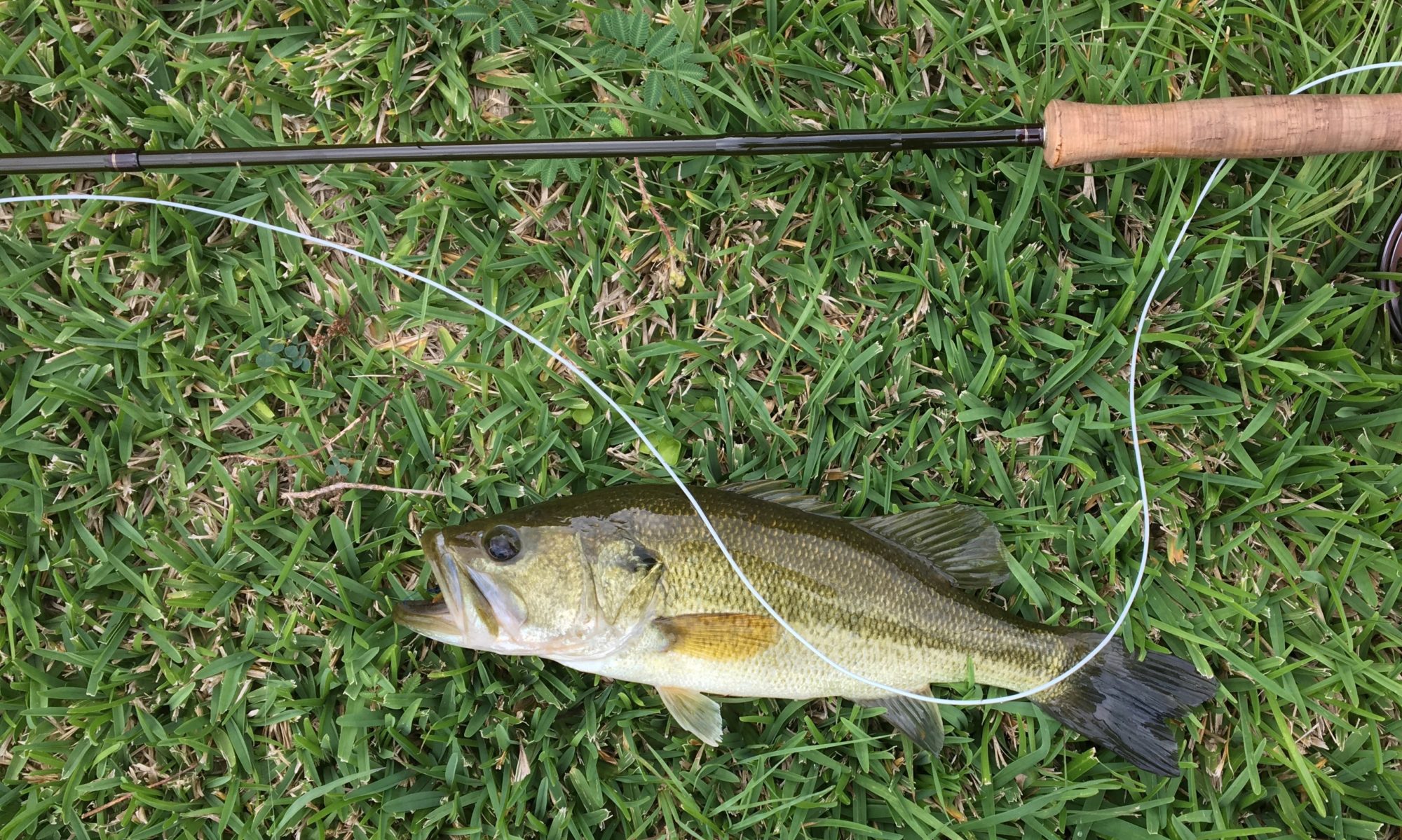
We still haven’t been to Oxford, and we haven’t been to a juke joint in the Delta. We haven’t caught a sunfish or a bass or a catfish in freshwater, and of course Kris didn’t catch a fish. Did I mention I caught a big fish? Let me show you a picture.

Music

There is so much great music out of Mississippi. Here’s a list of who was on our playlist, and I’ll only talk separately about stuff that was particularly interesting to me. Albert King, Mississippi John Hurt, Elvis Presley, Mississippi Fred McDowell, B.B. King, Robert Johnson, Faith Hill, North Mississippi All-Stars, Cedric Burnside, Jimmie Rodgers, Muddy Waters, Howlin’ Wolf, Cream. It could have had a dozen more.

  • Johnny Cash & June Carter, Jackson. This was very popular when it was released in 1967. Kris had never heard it. She’s a lot younger than me.
  • Cedric Burnside. This was a surprise. When you listen to Burnside you hear bands like the White Stripes and the Black Keys. He should be as well known.
  • Faith Hill, “This Kiss“. I originally downloaded a bunch of Faith Hill, then I got rid of everything but “This Kiss.” It’s an infectious song, but listening to Hill made me think less of country music than of a Broadway musical without the complexity of a Broadway musical plot. I couldn’t take it. She did record the theme song to Lilo and Stitch, which is one of the strangest movies ever.
  • North Mississippi All-Stars. This is a current band, and a band I’d go out of my way to see.
  • Jimmie Rodgers. I think I’d always confused Jimmie Rodgers with Governor Jimmie Davis from Louisiana, who may or may not have co-written “You Are My Sunshine“. I had never listened to Rodgers, who’s considered one of the foundations of country music, but is just as important as a white guy singing the blues. On “Blue Yodel No. 9” Louis Armstrong on trumpet and Lil Hardin Armstrong on piano accompany Rodgers on the blues and where the heck did that come from? With yodeling? Elijah Ward says that Howlin’ Wolf said that he howled because he couldn’t yodel like Rodgers, which if true may be the single wittiest thing anyone has ever said.
Jimmie Rodgers, source unknown.

Movies

O Brother Where Art Thou. There’s a cover of Jimmie Rodgers’ “I’m in the Jailhouse Now.”

Mississippi Burning. Mississippi had more than its share of Civil Rights Movement confrontation and violence. Richard Grant tells a story about pulling up to the collapsing store in Money, Mississippi, where the Emmett Till tragedy started. The tag line is basically that the folk of Money were exhausted: the murder of Emmett Till was the only thing they were known for. I suspect a lot of Mississippi, black and white, feels that way and wants to move on. I thought Mississippi Burning was no worse than it should be, but I suspect moving past that story line is the real story about modern Mississippi.

Guitar.

I took the Kohno, and sat in front of our cabin and played Bach. Another guest asked if I was hired or a guest which was flattering, but I should have told her I worked for tips.

Walter Anderson, Part of a Wall, Ocean Springs Community Center Mural, 1951.

Mississippi

I read too much Faulkner too early, and I didn’t understand much of it. I had an excuse for reading it: Faulkner and I were both born on September 25, different years but it seemed like Kismet. Kismet maybe, but Kismet didn’t aid comprehension. Do you know how incomprehensible Henry Sutpen or Joe Christmas can be to a young man? To an old man?

I had this notion that Faulkner would help me understand the South and what it meant to be Southern. Faulkner taught me many things: how to spell ya’ll, that classy folk come from Virginia and failed folk slide off to Texas, and that well-placed Southern dialect sholy is fun, if only in my head. He taught me that if a white guy had black ancestors then all sorts of hijinx will ensue, and that folk, black and white and in-between, are going to die violently. Because blood, maybe, or maybe just cultural failure.

Carl Van Vechten, William Faulkner, 1954, Library of Congress.

I suspect you can’t be filled with a young man’s optimism and get much out of Faulkner, except maybe The Reivers (which oddly enough is his old man’s novel). Faulkner didn’t write about glories, he wrote about failures. Notwithstanding my expectations, Absolom, Absalom! wasn’t Gone with the Wind, Intruder in the Dust wasn’t To Kill a Mockingbird. He wrote about the failures of history, personal and social, old and new, and that’s not the sort of message a young man will understand. At least I didn’t.

I don’t remember Faulkner ever talking about fishing. Maybe Faulkner should have written about fishing. I would have understood not catching fish.

Mississippi State Flag, Museum of Mississippi History.

All that incomprehensible Faulkner gave me an early and perhaps strangely skewed focus on Mississippi. Other than my friend Byron and a couple of quick drive-throughs, I haven’t had a lot of personal contact with Mississippi except Faulkner, and Byron, an expat (once for money and once for love), always seemed equally entranced with and reticent about the place–and notwithstanding a strong literary inclination has refused to read Faulkner. I had at least one second great-grandfather who landed in antebellum Marshall County, Mississippi, near Memphis at the top of the state. He stayed there long enough to marry a second great-grandmother in 1845, apparently his cousin, and then the two slid off to Texas in time for the birth of my great grandfather in 1848. Their sojourn in Marshall County was pretty much a drive-through. They didn’t start in Mississippi and they didn’t stay long after they got there.

Immediately west of Marshall County the Mississippi Delta runs for 200 miles south from the Tennessee border along the east side of the Mississippi River, to Vicksburg. At its widest the Delta spreads east for 80 miles. It is an alluvial plain, and has the richest soil on earth. West of the river there’s the Arkansas Delta, culturally and geologically and economically similar to the Mississippi Delta, but nobody talks much about Arkansas. It’s Mississippi that grabs the imagination.

Delta wealth was built on slave labor growing cotton. Cotton is still rich enough, but agriculture is mechanized, and doesn’t require the labor force that in the 19th century worked the land. Of the Delta counties 42 are considered distressed, only four are not. Why is Arkansas glad there’s a Mississippi? Because Arkansas isn’t last on every list.

Robert Johnson, c. 1935, Wikipedia.

Mississippi isn’t old, which is another thing I didn’t understand in Faulkner. Antebellum Mississippi was still the Wild West, and Faulkner knew it. In the 1850 census there were 606,526 people, less my second great grandparents who had GTT, having boomed from a population of 7600 in 1800. By 1900, the population was 1.797 million, 2.967 million in 2018. Statewide the population is 59.1 percent white, 37 percent black. About one-third of the Mississippi African American population lives in the Delta, where the African American population is 46 percent of the total. Some Delta counties are 85 percent African American. On the other side of the state, in Alcorn County, the population is 87 percent white. It’s not important, except that it highlights what is often not obvious about Mississippi: Mississippi isn’t one thing.

Jimmie Rodgers, 1935, Wikipedia.

But it is some things: it is the poorest state in the Union, between whites and blacks the most racially complex and more often than not the most tragic, the place where income, education, health care, poverty, life expectancy, teenage pregnancy, STDs, and history walk extreme racial and class divides. Within the state there’s a division between east and west, with the coast thrown in for good measure. A hundred years ago the Mississippi east was populist and progressive, and the Mississippi west was Dixiecrat planters controlling the votes of African Americans. Now things are flipped. In the 2016 presidential election Mississippi voted 57.86 percent for President Trump, but unlike much of the rest of the nation the split wasn’t urban/rural, the split was Delta and southwestern counties versus most of everybody else, black versus white. This map lays it out:

2016 Mississippi election map, stolen from Wikipedia. Forgive me.

Mississippi is also the source of some of our best good things. It’s the place of the Blues, B.B. King, Jimmie Rodgers, Howlin’ Wolf, Muddy Waters, Skip James, Mississippi John Hurt, Mississippi Fred McDowell, Robert Johnson. It’s the place of a good half-dozen of our finest writers, past and present, Faulkner, Eudora Welty, Shelby Foote, Walker Percy, Tennessee Williams, Richard Wright, and Jesmyn Ward, all are from Mississippi. There are whole hosts of novelists like John Grisham and Greg Iles who write pretty good if mostly forgettable novels. It can be argued that as the principal home of the blues it’s the principal home of rock-and-roll. It is certainly the home of Elvis (and directly across the River from Natchez in Louisiana Jerry Lee Lewis). All of this in one of the least literate states in the nation. Where the heck did all that come from?

Mississippi also gave us Jefferson Davis, the post-Reconstruction Mississippi Plan, 589 lynchings (539 of blacks–the most in the South), Emmett Till, and more than its fair share of the violence of the Civil Rights Movement.

We go to Ocean Springs in March to fish the salt marshes with Richard Schmidt. Ocean Springs is apparently the most charming city on that odd geographic panhandle that makes up the Mississippi Coast, Biloxi having been taken over by casinos, and it’s about an hour east of New Orleans. It is also the site of the 1699 French landing in Mississippi/Louisiana by Pierre LeMoyne, Sieur d’Iberville. Who doesn’t like to say Pierre LeMoyne, Sieur d’Iberville? The French accomplished many things in Louisiana, including the decimation of the Native American population by disease and warfare, the eradication of the Natchez Indians, and the introduction of African slavery. They didn’t accomplish permanent French settlement, losing out to the English who lost out to the Spanish who lost out to the new Americans, though the French did found Biloxi and Natchez. And New Orleans.

Pierre Le Moyne, Sieur d’Iberville. National Library and Archives of Quebec.

On pretty much a whim over the long Martin Luther King holiday we drove to Mississippi and visited Natchez, Vicksburg, and Jackson. Oddly, Natchez is closer to Houston than my hometown in Texas, but driving six hours west from Houston through Fort Worth and Wichita Falls is a decidedly different experience from driving through Louisiana and Mississippi. Natchez is full of sometimes pretty and sometimes magnificent Antebellum homes turned into bed and breakfasts, but as Byron had pointed out to me, nobody wants to stay in the slave quarters. We didn’t fish–it was cold, and there was flooding because of winter rains. At the Vicksburg National Battlefield, I realized that my Union great-great grandfather from Missouri via Eastern Tennessee was probably shooting at one or more of my Confederate great-great grandfathers. I could have ended right there on that battlefield more than 90 years before I got started.

At a popular restaurant in Vicksburg black and white Saturday night diners ate under decidedly Lost Cause paintings of the Siege. On the flip side, a popular country-clubby restaurant in Jackson populated by black and white churchgoers, Char, was decorated with old photos. Prominent in the entry of the place was a copy of a 60s photo of Medgar Evers. As I recall I had the catfish, or maybe the fried chicken. I definitely had the fried green tomatoes. I also kept wondering if I’d misidentified the portrait photo of Medgar Evers. It is a strange place, Mississippi, and the past there really is never dead. But black and white diners are eating happily at Sunday brunch under a photo of Medgar Evers. I reckon things are changing.

Maybe someday soon I’ll make my pilgrimage to Oxford and finally understand Faulkner.

Key West Packing List

Books

Short of England or Ireland or Manhattan there’s no island anywhere that’s the subject of more literary output than Key West. It runs from the sublime, Wallace Steven’s The Idea of Order at Key West, to the famously bad, Hemingway’s To Have and Have Not, to the fine, 92 in the Shade, to the sublimely ridiculous, Dave Barry’s Trip to Key West.

But what Key West and Florida generally are best known for is crime novels. If Oxford, England, has the most literary murders per capita of anywhere in the world, Key West must run it a close second. In novels by Randy Wayne White, Carl Hiassen, Lucy Burdette, Laurence Shames, Tim Dorsey, James W. Hall, and Michael Reisig (and I’m surely leaving some scribblers out) there are folk committing murders and mayhem and whatnot at a fierce pace down in the Keys. I don’t remember any John D. McDonald or Elmore Leonard novels set in the Keys, McDonald was Lauderdale and Leonard Miami, but if there aren’t they should get busy and posthumously take care of that. The remarkable thing about Florida crime fiction isn’t that it’s very good (and some of it is), but how little of anything else good is written about Florida. God is causing the Keys to sink under the ocean either because he thinks all those novels are true, or maybe because they are all true enough.

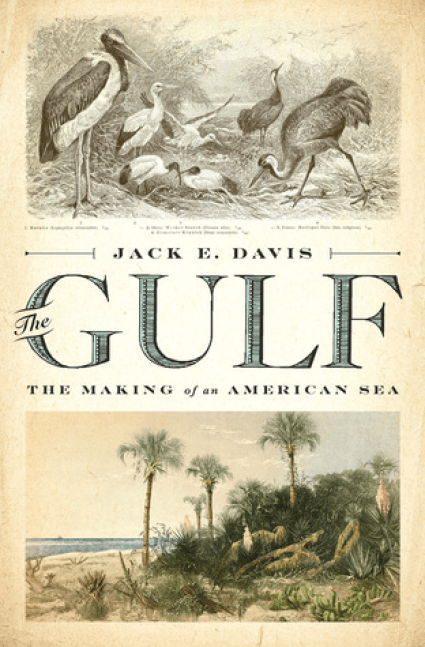
So I listened to a bunch of crime novels, particularly by Laurence Shames. They’re all entertaining (if not quite the thing as travel guides). I also read Jack E. Davis’s very fine Pulitzer Prize history of the Gulf of Mexico, Gulf: The Making of the American Sea. I can’t remember where or when I bought the book. It was on my bedside table and I was thinking about Mississippi and Florida so I read it. It didn’t have one of those gold stickers on the dust jacket that told me it was important, and I was mostly through it before I realized it was not just any old book but an Anointed Prize Winner.

As much as I’d read and thought about Louisiana last year Davis highlighted my limits. I didn’t think about the destruction of the marshes or deep water drilling or inshore damage from chemical production or the great agricultural dead zone in the Gulf, which are things that should be first to mind. I hit my personal dead zone. For Houstonians the environmental damage to the Gulf is so personal, so much both a part of and separated from our daily lives and so much of our own damn fault that it’s forgotten. We trust oil and chemical companies because we are oil and chemical companies. I loved the first 300 pages of Mr. Davis’s book. I suffered during the last 200.

When I went to my annual physical this week Dr. White and I talked about the book. Last year we talked about the new Ulysses S. Grant biographies and David Brion Davis’s Inhuman Bondage: my annual physical is my annual book club. Anyway we talked about the devastation at the end of Gulf and he told me not to worry about it because he was convinced humanity was doomed anyway. It was oddly comforting. Don’t worry that we’re destroying the planet because it’ll sort itself out after we’re gone.

There were two other minor take-aways from Gulf: Davis (Jack E., not David Brion) quoted off and on from the poet Sydney Lanier, particularly his Florida travel guide but also from his poems, and he wrote at length about the apparently mad painter, Walter Anderson. Lanier I knew as a Confederate soldier because of a local school-naming kerfuffle, but Anderson I didn’t know at all. I’d like to know more about both, but thus far I’ve found Lanier unreadable. It’s something I need to work on.

Rental Car

In Florida we rented a Nissan Rogue from National. Before last September I rented cars from Budget, mostly out of habit and because I always remembered which rental counter to go to. After bad rental experiences in Portland and Baltimore I looked online for car company reviews. I switched to National. I didn’t think it would make much difference, but in Chicago, Hawaii, and now Florida, they’ve been remarkable. They’ve been what customer service should be, and I’ll pay the few additional dollars to National for the customer care.

Meanwhile the Rogue had adaptive cruise control, which unlike when it startled me in Hawaii I expected. For the drive from Lauderdale to the Keys it was the best thing ever. Ever. I’ve seen worse drivers than South Floridians, in Naples and Mexico City the drivers are lawless and remorseless and mad, but South Florida drivers are their own peculiar brand of awful. There seems always to be a septuagenarian cranking 45 in the passing lane while a 20-year old in a Dodge Whatnot screams right and left through traffic, and all of it bordered by lines of 18-wheelers. Plus general heavy traffic and road work. It’s special. The adaptive cruise control helped sort things out.

Fly Fishing Stuff

Given that this was nominally a fly fishing trip I should be telling you what gear we used. We took some reels. We took some rods. Our guide, Andrew Asher, tied a crab pattern onto the 10 wt., and then we didn’t use anything but a 10. We didn’t use any other rod or fly until late in the day when I tried to cast for barracuda.

It was a beautiful day. There was some sun. There was some wind. There was some clear water. I think I’ll go again.

Bakeries

Glazed Donuts on Eaton St. in Key West has great donuts, and if you buy six they give you a box (so of course one always goes for the free stuff). That’s a bittersweet dark chocolate, and the key lime is filled with key lime pie. Quite an accomplishment.

Playlist

You know the Beach Boys are from California, that George Gershwin was from New York, and notwithstanding his current residence in Hawaii Willie Nelson is from Texas. You know the Allman Brothers are from Georgia, but they’re not. The Allmans are from Jacksonville.

You know that Jimmy Buffett is from Florida (except that he’s from Mississippi), and he’s defined how Florida is supposed to sound (which really isn’t quite to my taste), and Arturo Sandoval sounds like Miami, but all in all there’s not much there there when it comes to Florida music. There are great musicians–the Allmans, Sandoval, the Mavericks, Tom Petty, Ray Charles–and travesties, NSync and the Backstreet Boys and Lynyrd Skynyrd, but other than what came out of Cuba or Buffett there’s nothing that says Florida.

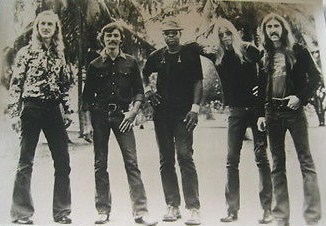
The Allman Brothers Band, 1973, from Wikipedia. Those were the days.
  • Dean Martin, Powder Your Face With Sunshine. This really isn’t about Florida, but I found it on a Florida song list. This is what Florida should sound like.
  • Zac Brown Band, Toes. This song is the love child of Jimmy Buffet and Michael Franks performed by a Georgia country and western band.
  • Jesse Harris, Secret Sun. Pretty.
  • Frank Sinatra, Let’s Get Away from It All. A useful song that mentions every state except Nevada. Ok. I’m lying. It doesn’t mention Hawaii or Alaska either, since there were only 48 states when it was recorded.
  • Nanci Griffith and Mac McAnally, Gulf Coast Highway. This was on a list of Florida songs, and it’s lovely, but it’s about Texas. Willie Nelson and Emmylou Harris cover it, which is the best,
  • Enrique Iglesias, Ballando. This is what Miami sounds like in the soundtrack in my head.
  • U2, Miami.  John Mellencamp, Miami. Counting Crows, Miami. They’re all different songs. The Counting Crows is the best of the lot.
  • Mel Tillis. Tillis is Florida’s most famous country & western singer, and he predates modern Nashville production. If you listen in the car you can pretend you’re driving a big rig coast-to-coast in 1969. For so long, I wanted you/To be my pretty queen./Now you’re mine, my purty one,/You filled my every dream.
  • The Allman Brothers. You can’t have enough Allman Brothers. I even made Kris listen to the entire 44 minutes of Mountain Jam. I think that will get us into the Guinness Book of World Records.
  • Tom Petty. You can’t have enough Tom Petty, but I did erase that song about zombies from my phone. What was he thinking?
  • Gram Parsons. GP. Everything’s better with Emmylou Harris.
  • Cannonball Adderly. In addition to Arturo Sandoval, Archie Shepp and the Adderly brothers, Nat and Cannonball, are from Florida. That’s pretty good jazz. I grew up with Adderly’s Work Song, and it makes me smile every time I hear it.
Nat and Cannonball Adderley, John Levin Enterprises-management/photographer-Bruno of Hollywood, 1961, reported on Wikipedia as public domain, but if not they can come get me.
  • Archie Shepp. Shepp was born in Florida, but raised in Philadelphia. I guess his connection to Florida is pretty tenuous, but that’s ok. So is mine.
  • Arturo Sandoval. I saw Sandoval and his band a couple of years ago, and he’s a master. He’s Cuban, and closely tied to Dizzy Gillespie. He sounds like Miami.
  • Jimmy Buffett. I’d rather not, but you have to. It’s state law, with stiff penalties for violation.
  • John Vanderslice, Romanian Names. Whenever Vanderslice came up on the play list I thought there’s nothing else in Florida that sounds like this. If I’d been playing a Brooklyn play list I would have thought, oh, another one of those guys. In some ways Florida is more mid-America than Kansas.
  • Lynyrd Skynyrd, What’s Your Name? This is why we should all despise Lynyrd Skynyrd. What a stupid idea for a song. It makes one think that Mr. Young was right after all.
  • Matchbox Twenty, How Far We’ve Come. This is why we should all despise Matchbox Twenty, if we have any clue who they are.
  • The Mavericks. Who knew the Mavericks were from Florida?
  • Ray Charles. Who knew Ray Charles was from Florida?

Coming back from Key West on the Overseas Highway we listened to Debussy’s La Mer (which was a bit oceanic for the calm seas) and two or three versions of Charles Trenet’s La Mer. It gave the drive a very French cast.

I took a guitar, but we went to bars instead.

Hawaii Packing List

I took my board shorts to Hawaii. I’ve had a pair for more than a decade, but before Hawaii I’d worn them only once to a charity gala, along with a tuxedo shirt and jacket and a bow tie with little palm trees. The fundraiser was formal but Hawaiian-themed. In Hawaii I wore them wade fishing and Kris made fun of them, even though I thought them dashing. Maybe she was making fun of my skinny white legs. The board shorts will be at Goodwill soon.

We both took 9 wt. rods, Kris took an Orvis HD3 and I took a Loomis Asquith, our Christmas presents to each other. I liked mine better. The Asquith is nigh on to perfect, but I need to use the H3 a bit to get used to it. They had different lines, too, and I may have cast the Rio line better than the Orvis. No one was injured by my casting.

I took a pair of Patagonia flats boots, the neoprene kind Patagonia doesn’t make anymore. I’d read that coral was a problem on the flats, and that heavy boots were needed. The Patagonias aren’t really heavy, but I didn’t have any problems other than sand in the boot, even around the volcanic rock. The bigger problem was that there was no way to tie them to the roof of the rent car, and they didn’t dry before we had to pack. Do you know how hard it is anymore to find a newspaper to stuff into your booties?

The rental car was a Subaru with adaptive cruise control. I’d never used adaptive cruise control, and didn’t know the car had it. It also had lane drift correction. That’s some startling stuff when you don’t expect it.

Where We Stayed

We stayed three nights in an Airbnb. I had tried to book Airbnbs before, but it never worked out. We were in a 15th floor apartment in an older apartment tower, and the tower showed its age, but it was central, within walking distance of Waikiki shopping, and cheaper than any of the Waikiki hotels. I gave them a sterling review, and they gave me a sterling review, and I doubt that either of us were exactly misleading the public or exactly telling the truth. We weren’t in the apartment much, and the coffee pot worked. The sheets were clean.

I’m guessing that a lot of Hawaii is a resort economy, which means a lot of folk scraping by on service jobs, and things are expensive. According to Jake the guide Airbnbs pull a lot of available housing off the market, and drive up the cost of what’s left.

Honolulu from Diamond Head

We spent one night at the Turtle Bay Resort because I wanted to see the north side of O’ahu. There were fashion models hanging out in the coffee shop, at least I guessed they were fashion models: they were young, thin, remarkably tall, pretty, and armed with a photographer. There were C.F. Martin ukuleles in the gift shop, and bad karaoke in the bar. There was a nice weight room and huge breakers. We weren’t there long enough for any resort activities, but sitting on the balcony playing the guitar and drinking coffee and watching the breakers was worth the effort. There was no free coffee in the lobby. I am immensely fond of free morning coffee in lobbies, but if I’d had free coffee I would have missed the fashion models.

Our final night we stayed at the Best Western Palace Hotel Honolulu, because we wanted to stay near the airport. We dropped the rental car that afternoon, took an Uber to dinner, and the next morning used the airport shuttle. It’s a plan that works well, unless the hotel is the Best Western Palace Hotel Honolulu. It’s tucked in at the edge of a grimy bit of freeway, has itself seen better days, and for the first time I recall I pulled back the covers and checked the bed for bedbugs. It was fine for the night before an early flight, and convenient, but next time I suspect I’ll pass. There were no bedbugs.

Where We Ate

We ate dinner the first night at Alan Wong’s, which is famous. It’s the granddaddy, and The Obamas Ate Here. Our waiter had learned his trade watching Bill & Ted’s Excellent Adventure, and things could have gone better. I’m sure it’s ok most nights, but I didn’t like the food much, and they lost us in the shuffle. Kris gave them one star on Yelp! I guess people only do Yelp! reviews when they own the place or they’re angry.

The Pig and the Lady

Waikiki shopping is like shopping Rodeo Drive, or the Miracle Mile, or Fifth Avenue, with all the high-end retail anyone could ever need. We ate dinner at a place called Roy’s Waikiki. It was very popular and perfectly decent and I greatly admired the lips of the Australian woman next to us at the bar, which were immense and must have been made, literally, for Waikiki. There were other parts of her that looked manufactured as well.  If you’re going to eat in Waikiki Roy’s is fine, though it’s not a place that looks like a Hank’s, or a Joe’s, or a Roy’s. I liked the tuna poke appetizer. Maybe if you go there the Australian woman will still be at the bar and you too can be amazed at the size of those lips.

The two hottest places in Honolulu are The Pig and the Lady, which was spectacular and my favorite, and Senia, which was Kris’s favorite and spectacular. They’re next door to each other in the old Chinatown, which pre-WWII was the place for sailors to go for tattoos, liquor, and sexual shenanigans and is apparently now the place to go for cheap rent and leis. The Obamas had dinner at The Pig and the Lady the week before, which if I didn’t like the Obamas would make an amusing joke. I do like the Obamas though, and I liked The Pig and the Lady. Those two places made up for Alan Wong’s.

At the Rainbow Drive-in Kris ordered for us and I got the plate dinner, but with fish, beef, and chicken on a single plate, plus chili covering the side of rice (but not the side of macaroni and cheese). It was delicious, all of it. We ate tuna poke at a random sushi place in a strip center (which I’d never have done in Houston). As for baked goods, the Coco Puffs at Liliha Bakery are obligatory, plus I had the Full Hawaiian Breakfast with Spam, rice, and fried bananas. I have a secret and long-standing fondness for Spam, Salt! Fat! Pork!, so I am one with the Islands.

Liliana Bakery

The malassadas at Leonard’s Bakery are the very thing, and if you order enough of them they come in a pink box. Get the one stuffed with guava jelly, and the one with the cinnamon and salt, and the rest of them.

Malasadas

I had the Obama shaved ice at Waiola Shave Ice, then ate the rest of Kris’s shaved ice which was some other set of flavors. It was healthy. It was fruit.

There may not be an Obama statue in Hawaii, but they sure let you know where the Obamas eat.

Where We Went That Didn’t Involve Fishing

The National Park Service and the Navy are keeping the Pearl Harbor monument open during the government shut-down with private donations. The Arizona Memorial is closed, not because of the shut-down but because it needs repairs, so we didn’t get to see my cousin’s name in the list of the dead: Houston O’Neal Thomas, age 20, coxswain. He was a bit older than my father, and I suppose they must have grown up together. He was a child. I suppose he had no notions of war. I hope his death was sudden and painless.

We toured the Ilioni Palace, which was the last royal residence of the last king, King David Kalakaua, and then the last queen of Hawaii. Queen Liliuokalani. The conspirators wanted immediate annexation of Hawaii into the States, but President Cleveland refused, and sent a delegation to explore restoration of the monarchy. When asked, Liliuokalani sensibly said she planned to cut off the conspirators’ heads. Her answer derailed restoration, but she was, after all, a queen, and off with their heads is always a queenly answer. Hawaii was later annexed by President Cleveland’s successor (technically his second successor), William McKinley.  The palace (which is modest as royal palaces go), is a monument to regret at the loss of sovereignty.

The Bishop Museum is also a bit of a monument to the monarchy, but it’s very fine, and probably the best collection of Polynesian artifacts in the world.

We climbed Diamond Head. There was some guy jogging up and down the path carrying a boom box blasting 80s music. Somebody should import ear pods to Hawaii.

Where We Didn’t Go

We didn’t see any of the other islands. We didn’t snorkel, so I still haven’t. We didn’t surf, and I never will, particularly since I’m getting rid of my board shorts. 

We didn’t eat poi at Helena’s Hawaiian. I’m not certain that Helena’s Hawaiian is ever actually open. It was closed all day Sunday and Monday and even on days it claimed to be open it closed by 7:30.

We didn’t see hula, though I did buy a reprint of a book first published in 1907 about the songs of the hula. We didn’t attend a luau. We didn’t visit a ukulele factory. We didn’t feed the mongoose, though I saw it.

We didn’t see the Honolulu Museum of Art, and we never walked on Waikiki Beach. We didn’t eat shrimp out of a food truck. Luckily we get to go back.

I didn’t buy a Panama hat from Newt at the Royal, so I’m glad I’m going back. It’s startling to realize that with a Panama hat, a cigar, and a goatee I could pass for a planter, or at least Colonel Sanders. They’re a bit fine to use as fishing hats.

Newt at the Royal Hawaiian.

Playlist

Hawaiian music is everywhere, everywhere. Maybe it’s just atmosphere, or maybe it’s pride and love. It can get cloying, but in reasonable doses it’s beautiful.

Unlike prior trips where I’ve depended on my own music collection with some supplemental purchases, I owned no Hawaiian music. I finally subscribed to Apple Music. It’s miraculous. I was able to download a perfectly respectable list of Hawaiian musicians.

  • Israel Kamakawiwoʻole. A half dozen years ago Israel Kamakawiwoʻole’s cover of Somewhere Over the Rainbow was all over the internet. He was a monstrous man, a man the size of a Sumo, and he was playing a tiny instrument and singing sweetly. He also did a cover of Take me Home Country Roads that doesn’t once mention West Virginia. I’m not sure that’s legal, but he was a bit of a rebel: he was a sovereignty activist.
  • Mark Keali’i Ho’omalu and Kamehameha Schools Children’s Chorus, Hawaiian Roller Coaster Ride, from Lilo & Stitch. Lilo & Stitch may be the strangest Disney movie ever made. I can’t describe the plot but trust me, it is . . . strange. And this is a fun song.
  • Elvis Presley, Hawaiian Wedding Song and Blue Hawaii. Elvis fits the jet-fed Hawaii. There’s also a very fine version of Blue Hawaii by the famous Hawaiian musician, Willie Nelson.
  • Keola Beamer and Kapono Beamer, Honolulu City Lights. This is a 70s album, and it sounds it. It is much loved, but they probably made records that carried the dated date less heavily.
  • Ry Cooder, Chicken Skin Music. In 1970 Ry Cooder made an album that probably still baffles folk. Chicken skin music is apparently a Hawaiian description of music so good that it brings goose bumps. The album features the great Norteno accordianist, Flaco Jimenez, and the great Hawaiian slack key guitarist, Gabby Pahinui. There is a cover of Irene Goodnight, and a cover of Stand by Me. The most Hawaiian song on the album, Hank Snow’s Yellow Roses, was as far from Hawaii as Tennessee, but it manages to sound like both.
  • Don Ho, Tiny Bubbles and Pearly Shells. I am of an age that remembers Don Ho. They are likable songs.
  • Gabby Pahinui. Of all of the Hawaiian musicians, Gabby Pahinui (1921-1980) is the one guy everyone should know. Gabby Pahinui is B.B. King or Ty Cobb. Ok, I’m mixing metaphors, but in his place, in his time, he was the distillation. He was a drinking man, but in the introduction of Iz’s Somewhere Over the Rainbow Iz announces “This is for Gabby.” It is Gabby who Ry Cooder included on Chicken Skin Music. It is lovely stuff
  • Na Leo Pilimehana, Local Boys and Waikiki. Na Leo Pilimehana is the girl group, and if the Beach Boys had been three Hawaiian women they would have recorded Local Boys. I sang Waikiki to myself for days. Sometimes I might have sung it out loud.
  • Steel Guitar Rag. It’s the song that stateside crystalized the popularization of Hawaiian slide guitar. There are versions by Bob Wills, Merle Travis, Les Paul, and John Fahey.
  • Louis Armstrong, To You, Sweetheart, Aloha. There’s also an album by Andy Williams. 
  • I guess Jack Johnson is the most famous contemporary musician from Hawaii. He was a competitive surfer but was injured, so he became a popular singer and guitarist. It’s hard to see how the boy ever got a date. It’s likable, amd it incorporates the sounds of Hawaiian music: sweet guitars, ukuleles.
  • Ka’au Crater Boys, Guava Jelly.  Motown meets Honolulu. “Ooh baby, here I am, come rub upon my belly like guava jelly.” That goes on to my road trip list.
  • Jake Shimabukuro, As My Guitar Gently Weeps. I think Shimabukuro may have single-handedly resurrected the ukulele.
  • Nathan Aweau, Akaka Falls.
  • The Brothers Cazimero, Home in the Islands.
  • Hawaiian Style Band, Let’s Talk Story. This one’s something of an ear worm.
  • Ho’ai Kane, Kona Red.

To get ready to go we watched a lot of the new Hawaii Five-0, and it’s addictive. I’m going to have trouble quitting.

For guitar music I worked on the Allemande movement to Duarte’s transcription of Bach’s first Cello Suite. I’ve worked on it off and on for years, and still can’t remember where the bass notes go.