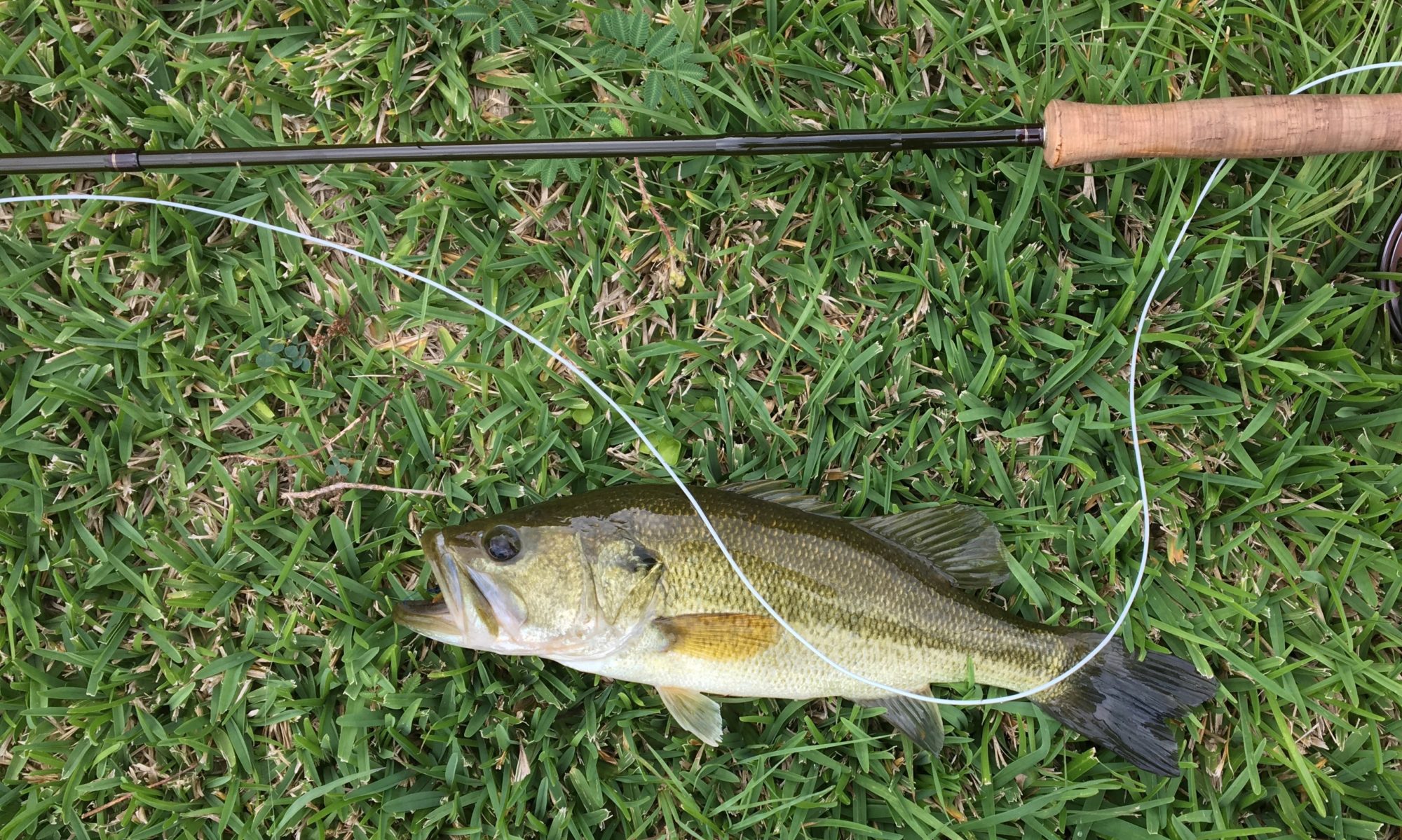

We fish in Virginia on May 14 on the South Fork of the Shenandoah River for smallmouth and May 17 in the Shenandoah Valley for trout. I’ve been getting ready, both fishing-wise and Virginia-wise.
Virginia-wise, I have 4096 10th great grandparents. It’s nothing special: most people do. Half of them were women, which is how that works. The one 10th great grandparent I can identify is pretty interesting, though with 4095 others out there somewhere our connection is pretty remote. Her name was Cicely or Sisely or Cecily Reynolds Bailey Jordan Farrar. Husbands died off and she married a lot. Other than spelling, a lot is known about Cicely. She even has her own Wikipedia page, though like a lot of Wikipedia pages written by descendants it includes some information and some wishful thinking. She arrived in Jamestown from England in 1610, right after starvation had killed off most of the colony, on the Swan. She was 11, and her parents weren’t with her. While she likely did have parents, there’s not much certainty in their identity. Her probable daughter (there’s a bit of probability involved), Temperance Bailey Brown Cocke, my 9th great grandmother, was born in Virginia in 1617, making her one of the earliest surviving English children born in the New World. To put things in perspective, the Mayflower arrived in Plymouth in 1620.
She was the first of my many English ancestors who arrived in Virginia between 1610 and the Revolution. There was a pile of them. I suspect that’s not uncommon for Southern folk whose ancestry is mostly English. Oh sure, there were outliers. There were some Ulster Scots who emigrated to Pennsylvania, and an Irishman who emigrated to Maryland, but even they pretty much moved on to Virginia. They weren’t all English-Scots-Irish-Welsh either. There was at least one set of French Huguenots and a German. But all-in-all Virginia seems to have been really good at importing English and Africans.
As a general rule the English-Scot-Welsh-Irish immigrants to Virginia were largely of two groups: relatively wealthy, relatively aristocratic immigrants who started arriving in the Tidewater in larger numbers in the 1630s, and their white servants and manual labor. Aristocratic British did not actually expect to do manual labor, and they received grants of land for each person they sponsored to bring over. They apparently brought over cousins for company and the poor for heavy lifting, and Britain used the colonies to clean out its poor and its petty criminals. In her study of poor whites, White Trash: The 400-Year Untold History of Class in American, Nancy Isenberg starts with the importation of Southern workers: the poor are always with us, but they were particularly with us down in Virginia where an underclass was imported as cheap labor.
It was really a pretty lousy deal. If you came over as an indentured servant, you were the property of your master for five to seven years. Life expectancy in Colonial Virginia was less than 25 years. The chance of surviving a five-year term of servitude was roughly 50-50. You could be sold. You could be beaten. You were dependent on the jerk who brought you over for your shelter and your daily bread. These were not kind times.
Of course there were worse things. There was slavery. Slavery was for life, no 50-50. Children inherited the enslavement of their parents. Worst of all slavery was premised on the slaveholder’s certainty in the African slave’s moral and genetic inferiority (not that the British aristocrat wasn’t certain of the indentured servant’s moral and genetic inferiority). African slavery doesn’t begin in Virginia, African slavery was the norm in Portuguese Brazil and the West Indies, but by 1619 there were Africans in Jamestown, and by the late 17th Century the Virginia aristocracy ran out of white people–giving the lie to Bingo Long. Birth rates were down in Britain, and the British economy was booming. It needed its poor for its own devices. David Brion Davis in Inhuman Bondage: The Rise and Fall of Slavery in the New World notes that in Virginia in 1670 white servants outnumbered black slaves four to one. By the 1690s slaves outnumbered white servants four to one. That’s a sea-change.
The Virginians had tried to enslave the Native Americans, but it didn’t work well. They were susceptible to European disease and unfamiliar with industrial agriculture. Africans on the other hand were familiar with large-scale agriculture and European disease. But an odd thing happened in Virginia. Throughout the New World–and these are very rough numbers–about 43 percent of slaves, mostly male, went to Brazil, about 41 percent of slaves, mostly male, went to the West Indies, and about 5 to 7 percent, still mostly male, went to the North American British Colonies. There were worse things than Virginia. Slave life on a Brazil or West Indies sugar plantation was short and brutal. Slaves were a replaceable commodity, and life expectancy for slaves was two to three years.
It doesn’t deserve praise, but raising tobacco or wheat was easier on slaves than sugar production, and the African population in Virginia grew. Importation of African slaves into Virginia slowed, and over a few generations the original mostly male population became (as these things do) a mix of males and females. By 1800 there were about 346,000 slaves in Virginia, most native-born. By the early 1800s the two largest slave markets in the U.S. were in New Orleans and Richmond. Virginia had more slaves than it needed for labor, and it exported its slaves, largely descendants of the Igbo from modern Nigeria, down South for cash.
Virginia also exported white people, though there was more self-determinism involved. By the early 1800s I had no ancestors left in Virginia. By the Civil War they had settled at one time or another throughout the South: Georgia, Maryland, Mississippi, Arkansas, Kentucky, Tennessee, South Carolina, North Carolina, Missouri, and of course Texas. The only Southern places missing seem to have been Louisiana, Florida, Delaware, and West Virginia, and as far as I can tell none went North. At least for my ancestors, Colonial Virginia was our Ellis Island, and that’s not an uncommon Southern pattern for whites. They also appear to have mostly married and had children with their own kind, and stuck to the same kind of cultural identity. When my parents met and married in 1949 in Crane, way out in West Texas near Odessa, two of their separate family ancestors, two of my 9th great grandfathers (of which there are only 1024, and 1024 9th great grandmothers–that’s the way this works) were the two representative in the Virginia House of Burgesses from Henrico County, Virginia, in 1644. The families were still neighbors after 300 years.
There’s a good book on Virginia em- and im-migration, white and black, Bound Away: Virginia and the Westward Movement, by Fischer and Kelly. Why is it that scholarly works all require a colon? There’s a bad joke there I think. In addition to English and Africans, the Virginians also imported brown trout, rainbow trout, smallmouth, and tobacco. My 10th great grandmother’s second husband’s land, Jordan’s Journey, bordered land owned by John Rolfe who brought tobacco to Virginia from the West Indies and married Pocahontas.
Meanwhile our saltwater skiff is still in San Antonio. The boat builder is repairing Harvey-damaged boats, so we need to be patient. I’m sill fishing for bass and sunfish, out of a canoe and from the bank, and have been trying to get some decent sunfish photos. On Go-Pro I’ve use a chest strap and taken photos of my forearms, just above the fish, and a cap to take photos of the back of my head. I’m just not very good at it.


