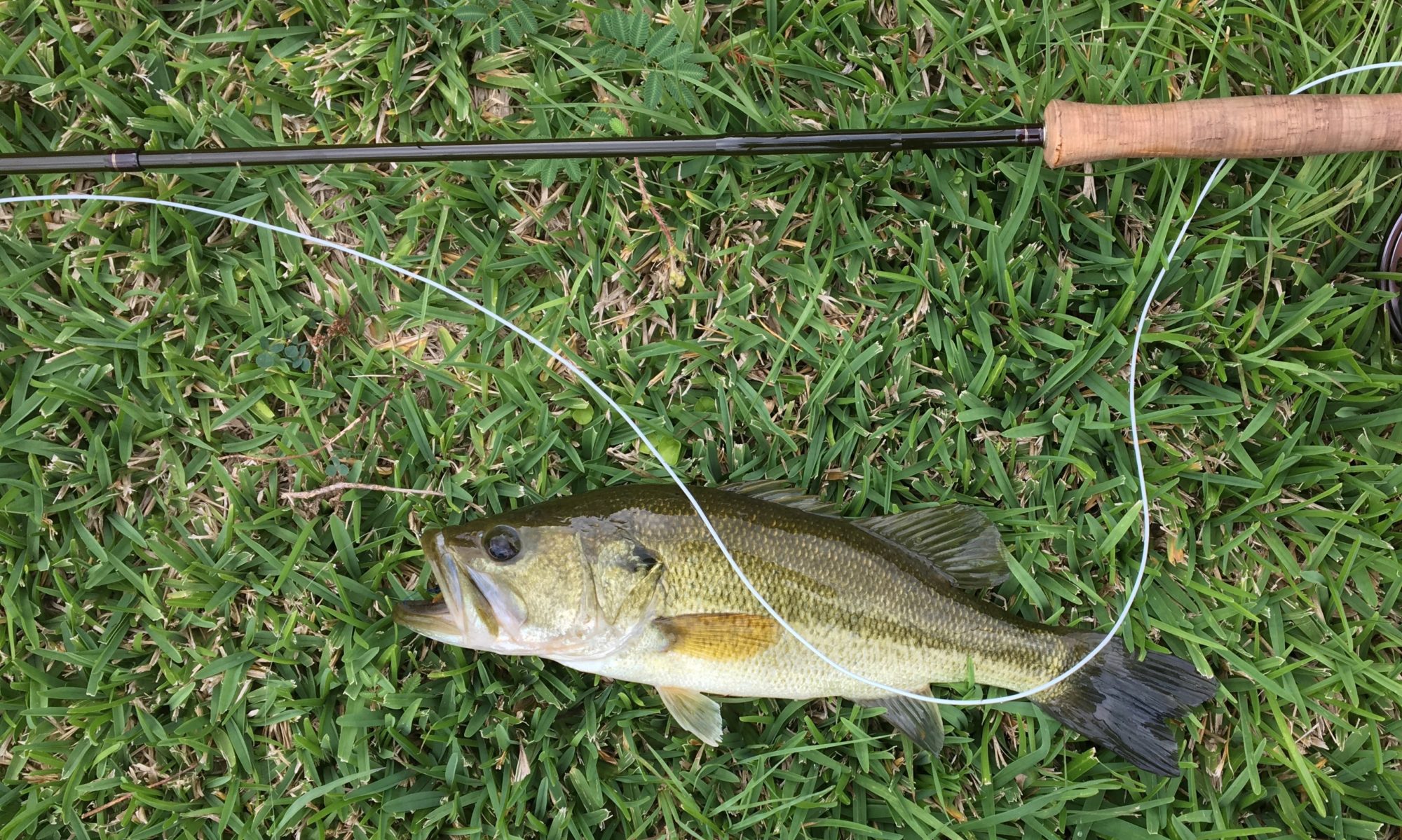
On Thursday we leave for Hawaii, which for some odd and I suspect Southern reason I pronounce Huh-wah-yuh, which Siri can’t understand when I call up my playlist. We should spend today packing, which we won’t. What do we take? Some shorts, some shirts, some wading boots. The couple of 9 wt rods we gave each other for Christmas. A guitar. We fish with Captain Jesse Cheape of High Tide Fishing, a full day on Friday and a half-day on Saturday. After that we’ll sightsee. I think sightseeing is required by the nature of the thing.
It is the second farthest distance we’ll travel, closer than Alaska but further than Maine. I’ve actually practiced casting some, which is frustrating and unrewarding. I’m such a mediocre caster. I’ve tried to keep up my Hawaii reading, and have been through a couple of additional Hawaiian books–The Descendants by Kaui Hart Hemmings, which was very likable, and Dreams from My Father by Barrack Obama, which was about his birth in Kenya.
I guess my thoughts have moved on to Mississippi, which I’ve been working on for May, and Florida which I have to go to in February. I’m beginning to despise Florida and its uncatchable fish, but the Astros open there in April, and if we fail again in February (with a one-day fishing trip to the Keys) maybe we’ll make a fourth trip in April.
Hawaiian music hasn’t really grabbed me: it’s melodic, sweet, all major keys and thirds and fifths and pure tones. I’ve been cheating on Hawaii with Mississippi Blues. It shares a slide guitar, but not much else.
Frontispiece, Life on the Mississippi, The Baton Rouge, 1883, Gutenberg.org.
I also cheated on Hawaii with Mississippi books, and re-read Twain’s Life on the Mississippi. It is such an essential book. It’s only a bit more than a six-hour (read eight-hour) drive from here to Vicksburg, and we could visit the battlefield memorial and the National Cemetery over the long Martin Luther King weekend. Of course with the government shut-down nothing at the National Cemetery would be open. It’s too bad all presidents aren’t required to be born in Kenya.
Early on Twain also traveled to Hawaii (née the Sandwich Islands) and wrote a series of letters from there for a San Francisco newspaper. I didn’t find the letters particularly illuminating, though Twain liked the place immensely and always talked of going back.
I’ve tied some leaders which won’t turn over, and some flies which won’t catch fish. I’ve also bought some flies, almost all of which are some kind of spawning shrimp, which is the only fly I can ever seem to remember on Captain Cheape’s list. I do own a bunch of bonefish flies, almost none of which are on said list. I’ll haul them along anyway.
Meantime the weather here in Houston is as good as it gets: clear, windless, dry, and cool, 61 degrees this morning with a high of 71 degrees. There’s a mockingbird singing through the open door to the porch. Maybe I’ll go look for black bass this afternoon, or spawning crappie. Yesterday we took the skiff out on Galveston bay, and the combination of cold weather and still air left the water clear. We saw some redfish, too.
Didn’t catch those either. We did get some excellent oysters and ceviche at the Black Pearl Oyster Bar on 23rd Street.
Thomas Rowlandson, British, Anglers of 1811, 1811, hand-colored etching, Metropolitan Museum of Art, New York, metmuseum.org
I’ve been doing this for a year, and I have a story that’s more or less true about how I got into this business. It started with a New Year’s Resolution. I’m good at New Year’s Resolutions, mostly. I make them and as long as they don’t involve wine I keep them, sort of. And they’re not confined to January either. Once I found myself telling an acquaintance that it was my New Year’s Resolution to go down a bayou in a canoe and somewhat high-handedly she asserted that you can’t make New Year’s Resolutions in July. Shows what she knows.
Thomas Best, Frontispiece, A Concise Treatise on the Art of Angling, 9th Edition, 1810, Wikimedia Commons.
I always figured that some day I would make it to all 50 states. I have been to plenty of states, particularly on the left side of the map and the center and the South, but then there are plenty of places I haven’t been. I haven’t been to Ohio. Who hasn’t been to Ohio? I haven’t been to the Dakotas. Ok, plenty of people haven’t been to the Dakotas.
But I’m not young, and mortality intrudes with bleak notions, such as I’d better get a move on or I’m never going to Maine, or Vermont, or New Hampshire. Maine and Vermont and New Hampshire are probably doing fine without me, so it’s no loss to them, but the first movie I remember that didn’t involve any of Walt Disney, Jerry Lewis, or John Wayne was Lawrence of Arabia, and it gave me forever the bug for travel, riding camels, and blowing up trains. I will never ride a camel or blow up a train, but I figure for a Texas boy Maine is at least as exotic as the Arabian Peninsula. Maybe more so, because how can those people be so different and speak English? They speak English, right?
Detail from a fountain, Palacio Nacional, Sintra, Portugal
So last New Year’s we were in Lisbon, the one in Portugal, and the whole time Kris kept asking why we weren’t fishing? I was pretty happy sampling port and eating pastel de Belém, but Kris would have none of it, and I couldn’t very well tell her there were no fish in Portugal. In Lisbon you can go to fancy shops to buy souvenier sardines in a tin, and they’re good, too, and pretty. Meanwhile I’d taken along a copy of Jim Harrison’s The English Major to read. I’d never read any Harrison, and The English Major had sat on my bookshelf since it was published in 2008. I remember pulling it off the shelf as we were walking out the door.
Tile detail in the cloisters, Porto Cathedral. Or maybe not.
The English Major is a book about a 60-year old whose beloved dog Lola dies and whose wife leaves him. He sells the cherry farm and goes on a mission to visit each state and rename the state bird. He also fishes. It resonated. I was 61. I wasn’t going to rename any birds but I fished. My 15-year old dog Lola was dying. I didn’t want Kris to leave me because I hadn’t arranged to go fishing in Portugal in January. I went back and read the New York Times review of the book and thought that the reviewer was too young to review that book. It’s an old man’s book.
Lola, South Padre Island
Oddly it was a month or so before it registered on me that I’d made a resolution to catch a fish in each state because I was reading Harrison. I’m quick that way.
There is a passage at the end of Batfishing in the Rainforest when Randy Wayne White says, more or less, that carrying a fishing rod gives you an excuse for being someplace, and that if you want to get to know the people in a place go to the local church. He’s talking mostly about Central America as I recall, but it’s good advice for just about anyplace that’s not Brooklyn.
So last year we made it to nine states (including the one we were standing in), caught fish in seven (Texas, Oklahoma, Louisiana, Oregon, Virginia, West Virginia, and Maryland), and owe two, Florida and Wisconsin, a re-visit. Who the hell can’t catch fish in Florida? Who the hell can catch a muskie? We fished a good bit, though I don’t recall going to any churches. We did make it to a lot of bakeries, which includes donut shops.
For next year we have only two certain things planned. We go to Hawaii in a bit more than a week, and in September we take a raft trip on the Middle Fork of the Salmon River. I go to Florida for business in February, but it’s Miami and I hate to give up on tarpon, and it will be hard to take Kris–this has become as much her project as mine. In May we may try the wee bit of Mississippi on the Gulf. I’ve looked at Minnesota, Massachusetts, New Hampshire/Vermont, New York, and a long road trip to catch the three great Southwestern tailwaters, the Green, Lee’s Ferry, and the San Juan.
The problem is that there’s always more in each state than we’ve got time for, and in each state there are so many other places to be. It becomes hard to get off the schneid. I could spend a week in Mississippi–we’ll be on the Gulf Coast, and I want to see Faulkner’s house at Oxford. I want to see Vicksburg and the Delta where the Blues were born* and Jackson. I want to see the two great Mississippi cities, Memphis and New Orleans. And the day on the San Juan we could spend on a tailwater road trip is short shrift for my beloved New Mexico. Waily, waily, waily! A drive through the Southwestern tailwaters should take a month.
Meanwhile Hawaii. Happy New Year!
Thomas Best, Frontispiece, A Concise Treatise on the Art of Angling, 7th Edition, 1807, Wikipedia.
*Kris and I have argued about this a good bit. She says that “blues” is singular, I say “the blues” are plural. There is an unimaginable amount of impolite discourse on the internet about this very subject. My thought is that the word encompasses more than a style of music: where the Baroque was born would always be singular, as would blues music. But “the Blues” encompasses a style of music, a collection of songs, a way of playing an instrument, and a state of being. It also ends in an “s.” I’m sticking to my guns, mostly because “the blues was born” to my ear sounds dreadful. At least one dictionary by the way says that “blues” is a plural noun which may have singular construction, whatever that means.
I watched a Facebook riot last week. I’ve seen internet kerfuffles before, and participated in a few: for years I’ve argued with Astros fanatics about first draft-pick Chris Burke’s place in the majors, the statistical value of OPS, and whether it’s important that as a catcher Brad Ausmus didn’t hit. Trust me on this. Fly fishing brouhahas are mild.
Lenny Bee started things off:
Notwithstanding Mr. Bee’s ambiguity, all of the 222 comments that followed assumed that the insanity referred to was the use of the Nippers by others, not that Mr. Bee was insane for not using the Nippers. The comments ranged from the practical (they cut 40 lb. leader like butter), to the sentimental (my wife gave them to me and I’m fond of both them and my wife–thanks Kris), to the manly (I use my teeth). There was plenty of righteousness, plenty of dismissal, some irony, some sarcasm, some frivolity, and finally, late in the day, one of my favorite internet arguments: “that’s stupid”/”no that’s stupid”/”you didn’t understand what I said you’re stupid”/”I did understand it and I’ve got a screenshot of it right here and you’re stupid.” Brilliant.
Of course Mr. Bee was being disingenuous. He actually had no doubt as to what drove the market for $85 Nippers: insanity. He says it right there, and I’ve got a screenshot to prove it! Ok, maybe he didn’t really think Nipper users insane, not clinically anyway, but there’s certainly the implication that anyone willing to pay for Abel Nippers is mentally deficient.
Other than teeth, the most popular argument against Abel involved nail clippers:
I’m assuming that nail clipper advocates aren’t using the costly but decorative “Fashion Clippers” on the left, and that they aren’t arguing that nail clippers are as aesthetically pleasing as Abel Nippers (notwithstanding their status as beauty tools). Compare the above photo of nail clippers to the photo of Abel Nippers below:
Theo Van Doesburg, Composition VIII (The Cow), 1918, oil on canvass, 14 3/4 x 25″, The Museum of Modern Art, New York.
Ok, not really. I’m lying. Those aren’t Abel Nippers. That’s an early modernist painting by Theo Van Doesburg. The pro-clipper argument is that cheap nail clippers function as well as Nippers, but I’ll concede the question of function. What I won’t concede is that Abel Nippers aren’t a good bit prettier than nail clippers, and that aesthetic pleasure can’t be its own reward. Nail clippers aren’t pretty.
There may be an ethical argument about spending $85 dollars on something as useless as Nippers, but I own fly rods, and I assume Mr. Bee owns fly rods as well, so it’s hard to argue the ethical virtues of frugality. Plus the economic argument runs both ways. I’ll stick to aesthetics.
Functionality
Ok, I lied again. A couple of thoughts on functionality. Able Nippers cut bigger stuff better, and that’s useful for saltwater, as is their aluminum construction. Cheap clippers rust. Besides that the lever on clippers would drive me nuts. I’d have dropped a good dozen rusty nail clippers into the bay fiddling with that lever.
As for using teeth, my teeth apparently gap at just the point they need to meet to cut leader. I can’t seem to cut 5x leader with my teeth, and I wouldn’t cut 16 lb. leader with my teeth if I could. I can’t whistle or roll my tongue either. Plus, if you cut leader with your teeth, your dentist is going to hate you. Who needs that?
Now on to aesthetics.
Abel Nippers and the Ancient Greeks.
Ancient Greek philosophers didn’t concern themselves overly much with questions of aesthetics, and the word hadn’t been invented yet anyway. They were worried about more pressing matters, like from whence is substance derived, and should we eat beans? Aesthetics were considered though, and the discussion generally followed three schools of thought.
Ancient Greek, Fish Plate, 350/330 BC, Campania, Italy, terra cotta red figure technique, The Art Institute of Chicago.
(1) Proportionality. The notion that beauty is derived from proper proportions is peculiarly sculptural and architectural: a head should be X, the forearm Y, and the torso X+Y-1. Notwithstanding its mechanical basis, there’s something intuitive to the notion of proportionality. An Abel Nipper that isn’t proportional to the human thumb and forefinger, that’s too tiny or too large, wouldn’t have much appeal. The same thing could be said though for a pair of fingernail clippers, so proportionality is ultimately a dead end. It can be admired, it can be necessary, but it’s not, in and of itself, the source of beauty, or even necessary for beauty. An El Greco is beautiful notwithstanding its figures’ proportions. A proportional statue of an old fat guy is still a proportional statue of an old fat guy. I know. I own a mirror.
It is fitting that proportionality held peculiar appeal for the Pythagoreans, what with their focus on the ontological significance of numbers. It was the Pythagoreans who first noted the proportional mathematics of music, and anyone who has to study music theory is still cursed by all those damned numbers.
Ancient Greek, Fish Plate, 400/370 BC, Athens, terra cotta red figure technique, The Art Institute of Chicago.
(2) Functionality. That beauty is derived from an objects’ appropriate function is peculiarly appealing. Abel Nippers are suited to their function, so they’re beautiful. But the notion that beauty is purpose-driven runs counter to our modern notions of art. Art doesn’t exist to carry out a function, it’s not a car bumper, or a sewing machine, or a banana slicer, it exists for its own aesthetic purpose. Marcel Duchamp’s Fountain, for instance, is decidedly removed from function. Decorative art may serve function, but high art is concept. And while our notions of high art are often absurd–as evidenced by said Fountain–there’s really no denying that aesthetic appeal can be derived from stuff that’s completely functionless. Just note Mr. Van Doesburg’s colored planes above.
Of course the argument for nail clippers is at least in part functional, and elevates functionality above aesthetics.
Ancient Greek, Fish Plate, 350/325 BC, Campania, Italy, terra cotta red figure technique, The Art Institute of Chicago.
(3) Formalism. Now I’m going all Plato on you. For the formalist, beauty exists as an ideal form, and an object derives it’s beauty from its proximity to the ideal. Notwithstanding its lack of proportion and its lack of functionality, a lump of gold can be beautiful because of its proximity to the ideal.
I’ve always found Plato’s formalism strangely alien, but when you think about it it’s really not. Truth is beauty, beauty truth. Beauty is something possessed by the object, a sunset, a mountain stream, a lump of gold, independent of the observer. For the observer, it is his awareness that allows him to perceive the beauty that independently exists. Plato’s forms are only an explanation for that independence of beauty. For the artist, mimesis (the Greek’s word, not mine) of the beauty of the natural world enables creation of something beautiful because it derives its beauty from that which it mimics. For the observer, awareness enables perception of beauty that independently exists.
Consider Henry David Thoreau, who possesses among other virtues and failings a decidedly Platonic streak. He goes to the woods to rid himself of daily intrusive quibbles, among other reasons because those quibbles block his perception of the Independent Beauty of Nature. At least part of Mr. Bee’s rejection of Nippers may be that they’re an intrusive and unnecessary sideshow that hampers his perception of the real source of beauty, and that he demands simplicity, simplicity, simplicity. I would only note that Mr. Thoreau did not remove himself far enough into the woods to leave behind his mother’s baked goods, or to keep her from doing his laundry, and that one suspects he well knew that not all sideshows are worth abandoning.
If you’re interested, there’s a good introduction to Greek aesthetics here: https://www.iep.utm.edu/anc-aest/
Attributed to Iran, Kashan, Bowl with Central Fish Motif, 13 C., stone paste, incised and polychrome painted under glaze, Metropolitan Museum of Art, New York.
Abel Nippers and the Moderns.
The modern inquiry into the philosophical basis for aesthetics begins in the 18th century, and Immanuel Kant is usually considered its progenitor. I hope that terrifies you. Whenever one starts with Kant, things get complicated fast, and aesthetics is no different.
Briefly (and maybe even erroneously–I’m not vouching for my understanding of these things), Kant’s notion of aesthetic beauty is that beauty exists in nature independent of the observer. The perception of that beauty is the disinterested aesthetic judgment of the observer. It is disinterested in that we perceive the beauty inherent in the beautiful, not because we create its beauty because of our perception. Did I mention that Kant complicates things fast? To say it differently, like Plato Kant finds beauty objective rather than subjective, and the perception of beauty is driven by the fineness of the observer’s aesthetic judgment.
Pierre van Boucle, Flemish, Still Life with Carp and Pike, 1652, oil on canvas, The Museum of Fine Arts, Houston.
Clive Bell, brother-in-law of Virginia Woolf, art critic, and all-around reprehensible human being, in his thoroughly Kantian Aesthetic Hypothesis, speaks of how Art, the combination of line and color comprising significant form, provokes the aesthetic emotion among those capable of aesthetic experience. It is the provoked emotion that allows us to recognize Art. Of course for Bell the aesthetic emotion is subjective, and there are a lot of other emotions, fear, love, awe, or whatnot, but the aesthetic emotion is separate and apart, arguably altogether finer, than all that other stuff. Assuming that the Abel Nipper is Art, Mr. Bee’s rejection of the Nipper, his rejection of the aesthetic emotion triggered by the Nipper, is a failure not of the Nipper but of his own aesthetic temperament. If his aesthetic temperament was properly acute, he would not need to own or use the Nipper to have the aesthetic experience: he would perceive the Art of the Nipper.
Of course if you live in the modern world you know where this is going: beauty is in the eye of the beholder.
Francisco de Goya, Spanish, Still Life with Golden Bream, 1806-1812, oil on canvas, The Museum of Fine Arts, Houston.
The modern notions of aesthetic intention speak not to the quality of the object, but to the quality of the attention paid to the object. The object could be a painting, it could be sport, particularly baseball, it could be a hobby, it could be Nippers. The aesthetic attention paid to the object–let’s say in this case fly fishing–could be enhanced by the aesthetic attention paid another object, the appeal of a reel or a rod, the beauty of Nippers, depending on the observer. For me my Abel satin blue Nippers become a sort of touchstone: I think they’re pretty, my wife gave them to me and I’m fond of the gift and more than fond of the giver, they are part of my usual gear that I enjoy using. They don’t detract from my overall attention to fly fishing, they enhance it. Am I insane for my Nipper fondness?
Well of course I am, and I also have two Abel reels.
Robert W. Hines, U.S. Fish and Wildlife Service, 2013.
Fish reproduction is peculiar, not sensible like human reproduction. Salmon run upriver and die. Bass get mean. Meaner. Tarpon daisy chain, which nobody can figure out. And then there are bonefish.
Ok, maybe human reproduction isn’t all that sensible either.
There’s always some introductory justification when researchers turn into bonefish voyeurs : Bonefishing is an X-Hundred-Zillion-Dollar-Industry here in the Bahamas, or in Florida, or the How-Do-I-Get-There Atoll out in the middle of the Indian Ocean. I don’t think though that the researchers are only watching bonefish sex for the money, there’s love involved. After all, it’s a tough job. You have to hang out on tropical seas.
Even now, when observers are starting to figure out spawning, they’ve still got no notion of bonefish adolescence. Why the heck are bonefish such a mystery? One supposes that this isn’t rocket science, but it seems like UFO science.
Of course the whole business involves the full moon. Tarpon do that too, but really? The full moon?
Bloch, Marcus Elieser; Schneider, Johann Gottlieb; A. plumieri & Poecilia vivipara, Systema ichthyologiae iconibus CX illustratum (1801)
In 2017 researchers from the Bonefish & Tarpon Trust identified a seventh bonefish pre-spawn aggregation site at Andros in the Bahamas. This is important, bonefish can’t meet likely mates on the web, so they throw big parties. Raves, Roman orgies, high school proms have nothing whatsoever on a bonefish aggregation. The sites can’t just be random, there’s no text messages saying “meet here.” There are no invitations. If a site is damaged, if a site is developed or destroyed, then future generations of bonefish are damaged.
According to researchers from Florida Tech, sometimes aggregations can be 10,000 fish. The fish rush to the surface to gulp air. They bump each other. Let me say that again, they bump each other! All of this timed by the lunar month, each full moon. Then after the bumping things get really wild.
As night fell, fish in the school quickened their pace and headed for the drop-off at the edge of the reef, where water depths exceed 1,000 feet. Using special tags they had inserted into the bonefish on a previous day, the team tracked the school as it quickly descended past 160 feet and drifted about a quarter mile from the edge of the drop-off. These shallow water fish were now suspended in the deep ocean, in water thousands of feet deep. After an hour in the deep, the bonefish suddenly rushed upward, releasing their eggs and sperm as they reached 80 feet below the surface.
University Researchers Observe Surprising Bonefish Spawning Behavior in the Bahamas, Florida Institute of Technology Newsroom, December 11, 2013.
So thousands of fish aggregate, get all hot and bothered, rush the ocean and dive, then after some deep-water foreplay rush the surface broadcasting their boy stuff and their girl stuff in a massive orgiastic exhalation. Now tell me that’s not peculiar.
The rushing of the surface isn’t random. Apparently the change of pressures is a piscine erotic massage required for the release. In the lab, researchers have only recently gathered pre-spawning bones, shot them up with spawn-inducing hormones, and then massaged the fish to gather eggs and sperm. I kid you not.
After all that rushing and broadcasting, the fish go home.
Meanwhile fertilized eggs are left drifting in the current. This isn’t different really than the life-cycle of tarpon, or redfish, or the American eel. Go to the ocean, have a fling with a couple of thousand other fish, then go home and leave your larval children to make it or not. “I gave them a good start,” says Momma and Papa Bones, “Now they’re not my problem.” The larval stage lasts a couple of months.
If they survive the planktonic stage, larval bonefish find shallow waters where they change into miniature versions of their parents. Unfortunately, we’re not sure where this occurs.
Frankly, it’s almost a surprise that we know it occurs at all. Then the juvenile stage:
Despite extensive sampling throughout the Florida Keys and Caribbean, we don’t have a handle on which habitats are required by juvenile bonefish. We have found a lot of juvenile bonefish while sampling sandy beaches and open sandy bottom, but nearly all have been Albula garcia – not the species caught by recreational anglers. The search goes on.
If they’re like most juveniles, they don’t want the adults to know what they’re doing.
* * *
The weather is not good. A bit too cold for fish, and too many fronts coming through. The flow at the Guadalupe is too high for wading, and it’s not the time of year for bass. All my friends who spend time outdoors seem to be hunting. Hunting’s one of those vices I haven’t cultivated.
So Friday on the 50-fish dinner trail we went and ate sushi at MF Sushi. I had been there once before, several years ago in a different location, and it was better this time. Kata Robata, Uchi, and MF Sushi are the three sushi hotspots in Houston, with two of those being imports, Uchi from Austin and MF from Atlanta. They offered baby barracuda. I had never seen barracuda on a menu, and Kris wouldn’t order it because she was certain it would immediately kill her.
The barracuda was grilled, but cooking doesn’t kill the ciguatoxin that occurs in barracuda. It’s a chemical toxin that’s produced in algae and accumulates in apex predators, so the “baby” gave me comfort. The toxin also occurs in grouper and amberjack. Even though it’s dangerous, barracuda are eaten throughout the Caribbean.
Even if you get sick, barracuda doesn’t usually kill you, and that’s what I remembered. The worst symptoms are usually cramps, muscle and joint aches, vomiting, and diarrhea. What I didn’t remember was that the symptoms can last months. If I’d remembered that, and if I hadn’t had that martini, I’d probably have skipped the barracuda. It does seem fitting though that writing about bonefish, I was eating one of their principal predators. Maybe it was fitting, or maybe it was that martini.
The next morning we took out the boat. It was too windy and choppy, and running across the bay we got soaked. We spent most of the time floating deeper water looking for fish on the sonar. We didn’t see anything bigger than bait.
Most tides in the Galveston bays are small, a foot is a huge tide, but Sunday was bizarre. See that dock? High tide would usually be a few inches below the deck. Low tide might show some oysters. Yesterday the combination of the winter solstice moon and the high winds had knocked all the water out of the bay. It wasn’t a day for the flats, even in a skinny water boat.