Middle Fork Salmon River, Idaho, September 23-28, 2019.

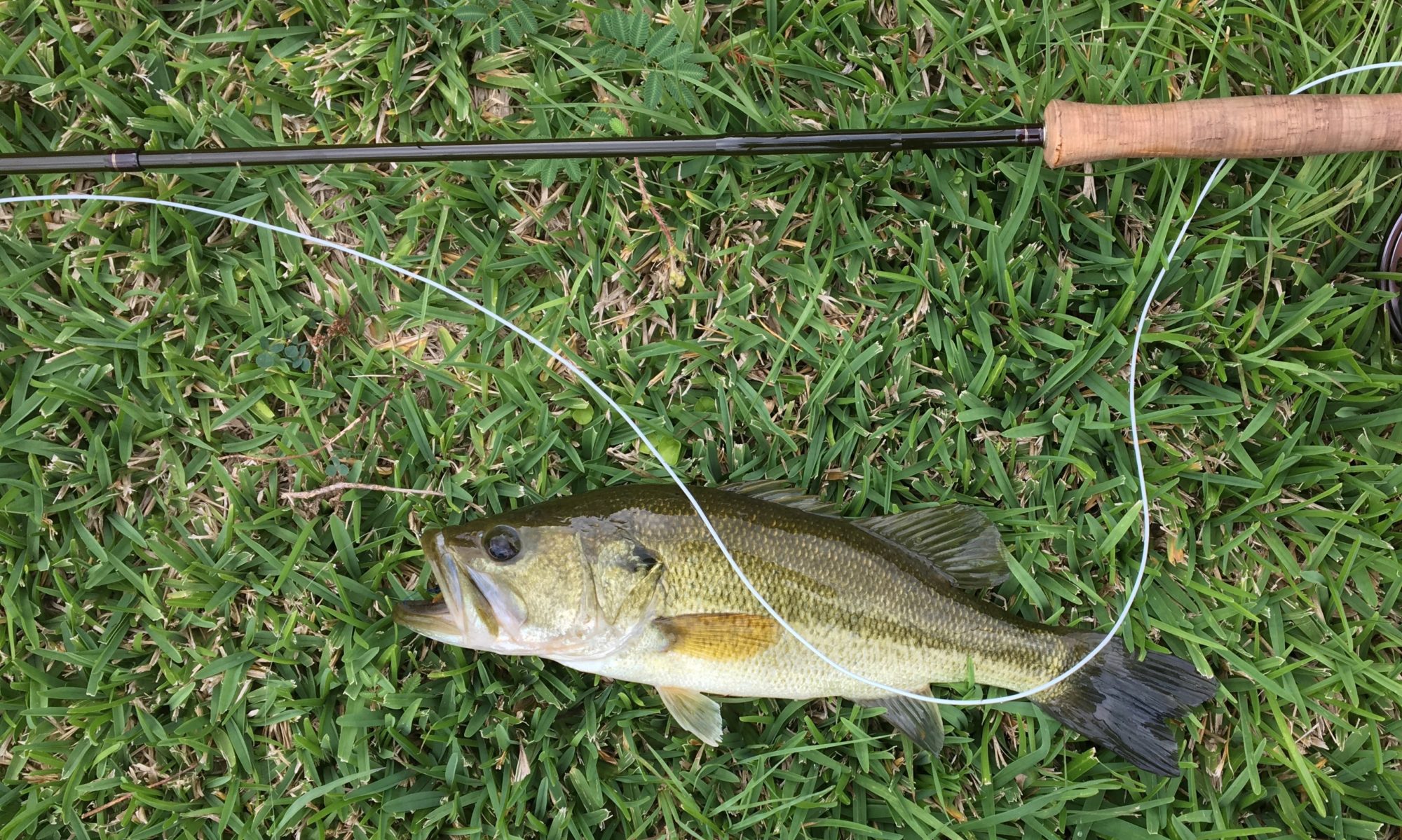
We rafted six days down the Middle Fork of the Salmon River, and except when we had to sit down through rapids we fished. We caught and released fish too, lots of fish: native west slope cutthroats, a couple of small parr-marked rainbows evidencing a prior successful steelhead romance, and two eight-inch Chinook smolts ready to attempt the 1000-odd mile trip to the Pacific. We didn’t raft on our own; Kris never rowed and I never set up a tent. We were with Solitude River Trips, along with 16 other clients and 11 guides. The guides did everything of importance, including rowing, making coffee, cooking food, and untangling leaders. The guests were an unnecessary but happy accompaniment to the guides’ good work.

The guests drank coffee in the morning and beer in the evening and fished. I gained weight during my wilderness experience, which weight gain was fun at the time but not so good in retrospect.

The Middle Fork of the Salmon cuts through the Frank Church Wilderness, which is the largest contiguous protected wilderness in the lower 48, which is a long way around to saying it’s big but don’t forget Death Valley and Alaska. Under the 1964 Wilderness Act no new improvements–roads, mines, convenience stores, or apartment complexes–are allowed. It’s name is actually the Frank Church River of No Return Wilderness, changed in 1984 to honor Idaho Senator Frank Church.

U.S. Forest Service, A User’s Guide: Frank Church River of No Return Wilderness

The Salmon River Mountains dominate the Wilderness. The Mountains are a discrete range of the Rockies, defined by the Salmon River and its tributaries. The Main Fork canyons are actually deeper than the Grand Canyon, though not so sheer or dramatic. It’s plenty dramatic enough. There’s low brush and trees along the river, steep barren elevation changes marked by scattered pines and granite faces, blocks, and scree, and high crags covered by new snow. Like I said, plenty of drama.

It isn’t the River of No Return Wilderness because you go there and never come out, but because if you come out by river you can’t turn around and go back by river. Even going down the Salmon is hard, and the lower canyon of the Middle Fork is impassable except by boat. I guess that’s why somebody named it Impassable Canyon. I’m quick that way.

When Lewis and Clark reached the Salmon they abandoned their original plan to float the river to reach the Pacific. It could have been done, the Salmon to the Snake, the Snake to the Columbia, the Columbia to the Pacific, but it ain’t easy. The Middle Fork is the same only more so, and in these late days while the Main Fork is generally accessible by car we could only reach the Middle Fork by bush plane.

Bush plane, a tiny four-person piper, to the put-in at Thomas Creek Airstrip on the Middle Fork. The pilot Mike pointed out we were often flying below terrain. That meant that when we looked out the window we were as often as not below nearby mountain ridges. It was all pretty exciting, though Mike wouldn’t roll down the windows and let us fish.

The Middle Fork runs northish, and the guides brought the rafts downriver from the south to meet us when we got off the planes. During higher spring and summer water the float trips are longer, 100 miles. We did 60, which made things both leisurely and less crowded. School was back in session and late-fall Idaho weather can be iffy, wet and cold, so there weren’t a lot of other parties on the river. Flows were very low, about 1.6 feet at the USGS gauge near where we put in. While coming downriver we could look up to see 15 feet above us where early-season high water had slammed debris into rock crevices and the forks of trees.

The weather, by the way, was perfect. Sunny and cool, clear except for a bit of spitting rain one afternoon and a lot of wind the final day.

We were there for west slope cutthroat. Seven states have cutthroat as their state fish, and the list reads like a Who’s Who of western fly fishing: Colorado, Idaho, Montana, Nevada, New Mexico, Utah, and Wyoming. William Clark wrote the first description of cutthroat, and the species, Oncorhynchus clarkii, was named for Clark. The subspecies, west slope (Oncorhynchus clarkii lewisi), was named for both Lewis and Clark. It is such an American fish.

USGS, Native Range of Cutthroat Trout, excluding southeastern Alaska, in ochre. That’s the orangy brown.

There are 14 identified subspecies of cutthroat, spread across the western states and Canada. Two subspecies are extinct. Two subspecies, the Lahontan and the greenback, were thought extinct but were rediscovered in remote streams.

Loss of habitat has decreased cutthroat populations. Because of its seclusion, the Middle Fork remains one of the great cutthroat rivers. The great fish, like the great places, often survive on the margins.

United States Forest Service.

The cutthroat looks like its closest kin, the rainbow, without the brightly-colored side-bands. The cutthroat’s distinguishing mark, and one of the prettiest (and most violently named) marks in fishdom are the crimson symmetrical slashes at the bottom of its jaw, the slashed throat, the cutthroat. The west slope’s back is green, and marked by tiny sparse fine dark spots towards the head accelerating in density down the back and sides through the tail. The belly is bright silver. In the middle fork they are small, with a good fish at 14 inches, and until the wind drove me to a 5 weight a 3 weight was the very thing.

The Middle Fork runs into the Main Fork, where we would take out six days after we put in. The anadromous fish, steelhead and salmon, make the run the opposite way from the Pacific to have sex and die–which I guess is better than making the run the opposite way just to die. Even though impeded by power dams and predators and whatnot, there are still both salmon and steelhead that make the journey, the longest fish migration in North America, the river of sometimes some return. Do you think salmon quote Kipling as they head upriver? Ours is not to wonder why, ours is but to do or die. It is such a cruel joke: Sex and death: they’re just piscine Romeos and Juliets.

Snake River Watershed, by Shannon1, under GNU Free Documentation License.

After packing the stuff in our tent–the hardest work of our day and really almost too much to bear–and after breakfast we were on the river by 9ish. I played the guitar in the morning, sitting as close to the river and the fire as I could get, drinking coffee, trying to remember bits and pieces of Bach and Gaspar Sanz and Tárrega. It was the most pleasant thing in the world, at least for me. I can’t speak for the poor people who had to listen.

When we weren’t on the river we spent considerable time lazing around with the 16 other clients while waiting for the guides to do all the work. We were from a narrow range of circumstances. The largest contingent was from Portland or just on the Washington side of the Oregon-Washington border. There were five Texans (including us), with four from greater Houston and one from Austin.  Two clients were from New Mexico, two from Idaho, and then some outliers, Alabama, Maine. There were doctors, lawyers, hydrologists, retirees, a nurse, and a consultant.

It was a congenial group, educated, mostly older, tending towards the same predispositions and attitudes. There was an evening when I sat with Lynn and Dan, Mike and Carol, Russell and Cathy at dinner, and we veered into politics.  Lynn from Maine believed that Susan Collins would retire rather than run for the Senate again, which was interesting to me. No one was injured because of the political discussion, which was also interesting to me, but then there wasn’t a lot of voiced disagreement either. I suspect some who differed from the voiced opinions kept their mouth shut.

On the way downriver groups are permitted for designated campsites, and at night we would arrive with tents up and dinner underway. We hiked some during the day, once to see Shoshone pictographs, once to a waterfall, but mostly we floated and fished, or in the two boats of non-anglers floated and watched the wilderness. I supposed at my most intense all of the Middle Fork looked to me like the couple of square feet of water around the fly I was fishing. It’s no wonder that back home from time to time I find myself standing in the middle of a fire ant bed. I kinda narrow my focus when I fish.

We fished dry flies, big hoppers mostly, or hoppers with a purple haze dry dropper, or hoppers with a weighted underwater purple prince nymph dropper. It didn’t matter. The fish were gullible and eager. I had checked the hatch chart–the chart of bugs that are likely to appear in that place at that time–in my ancient copy of Great Hatches, Great Rivers, a classic that I’m sure is on everyone’s shelf. The Middle Fork isn’t one of the listed rivers, but Silver Creek was, and I figured that was close enough. Grasshoppers it said, grasshoppers and flying ants and blue-winged olives.

I tried to tie some size 20 blue winged olives, tiny wee things that could fit four flies comfortably together in the cup of a contact lens. It wasn’t my best effort, producing lumpy, misshapened mayfly imitations that would have embarrassed the Creator if they looked like anything in creation. It took me three weeks to crank out five, and then I left them in my box, ashamed and distrustful. Hoppers on the other hand were more in my wheelhouse, and I found an easy pattern from FlyFish Food that I could crank out simple as kiss my hand. Flying ants were easy too.

And I caught stuff on the hoppers, if not the flying ants. So did Kris, and for the most part Kris caught better fish than me all week. There was a day, my birthday, when she outfished me all day and I spent most of the day untangling leaders and maybe, maybe, managed five fish. I reckon God was punishing me for those ugly blue-winged olives and for being old.

There was a day too when I outfished Kris, and at the end of the day the guide held the boat past an underwater granite shelf where clear green water dropped off of a riffle into a deep slow hole. I made perfect casts back over my shoulder and each time caught a fish and too often crossed Kris’s line. I had already caught dozens of fish over the course of the day and Kris finally caught two, all day, and not that we’re in the least competitive but yeah, we are sometimes competitive. I’m lucky I made it off the river and am not still treading water in that deep green hole. In any event the last day I was punished and sent to the back of the boat.

The middle fork is a wild and scenic river, undammed, as is the Main Fork. At dinner the final evening—steak night! Baked potatoes, surely from Idaho! Sautéed mushrooms! More red wine! Did I mention the food was just fine? And red wine?—Mike and Russell discussed Snake River dam removal. In 2020 the Corps of Engineers is scheduled to publish its report on removal of four dams on the Snake down drainage from the Middle Fork, so the report is likely to be completed in the next decade or so.  In the Columbia River drainage most dams were built first for cheap power and second for irrigation and flood control. Woody Guthrie, that shill for Bonneville Power, wrote Roll On Columbia and 25 other songs in the 30s as damned dam propaganda. Cheap power changed lives. It also changed rivers.

Mike sided with dam removal. Russell argued that removal wouldn’t matter, that there would still be plenty of dams left to kill salmon and steelhead on their way to or from Idaho. Mike said the loss of salmon and steelhead was increased incrementally dam by dam. Russell countered that collected sediment made removal impractical and probably harmful. I stayed quiet, but that last seemed like an engineering problem, and the popular notion is that rivers heal quickly after dam removal.

Russell was passionate, Mike was passionate. Russell said that the economic upheaval from removal would be enormous.  Oddly the damaged people were more abstract to me than the restored river and the steelhead and salmon—my reaction reminded me of the incident in Edward Abbey’s Desert Solitude, where Abbey says that he’s a humanist, that he’d rather kill a man than a snake. I was a bit surprised at my own callousness, but all-in-all I’d just as soon let both the man and the snake be. If I parsed it correctly though Russell’s argument seemed to be that people who depended for irrigation and recreation from the dams have a right to dam preservation.

I doubt that there is any right to preservation, or if there is that it couldn’t be compensated–that’s my lawyerly training–but I have to admit my own reasoning was largely selfish. Those wild cutthroats in that wild river were not trophy fish, there were plenty of places to go to catch bigger fish and rarer fish, but these were wild and native fish, fish whose species and subspecies had been in that drainage from before our predecessors crossed the Bering Strait. Each one we caught was a beautiful fish, and when you watched them rise to your hopper, suddenly appearing suspended in the river a foot below your fly, it was somehow just better, better than other fish, as perfect as anything in all the world.

Silver Creek, Idaho. September 21, 2019.

We fished Silver Creek because it’s required, like going to Wrigley Field if you like baseball. Going to Wrigley doesn’t mean that you like the Cubs: Who likes the Cubs? It doesn’t even mean you like Wrigley. It’s a dump full of drunk Cubs fans, hard tiny seats, obstructed views, cold cold wind off Lake Michigan, and was once the home of the Federal League Chicago Whales. The Whales. The Chicago Whales. Still, it is a baseball shrine, and later I always find ways to work into conversations that I went to Wrigley last time I was in Chicago.

It’s a burden to place on a small river, and it’s a slip of a river, only 12 miles long from the originating springs. It’s a mineral and bug-rich high desert river that supports populations of wild browns and rainbows and 150 species of birds. It’s not quite clear as glass and not quite smooth as glass, but it’s clear and smooth enough for the description to work, even when it’s overworked.

We fished the Silver Creek Preserve in the morning, owned and managed by The Nature Conservancy, and later in the day fished private Silver Creek water accessed by our guides, Picabo Angler. Where we fished in the Preserve the river wasn’t much more than 100 feet across. Deeper portions are fished with float tubes, but it was late September and for us Houstonians the weather was cold beyond imagining. We stayed shallow and waded until the arctic wind drove us off the creek for lunch. I swear it was colder than 60°. Brutal.

By my lights Silver Creek is bigger than a creek, smaller than a river, honestly more like a bayou, a really clear bayou without alligators and mud, and with lots of trout and lots of bugs. Silver Bayou just doesn’t have the ring of Silver Creek, though just about every state seems to have a Silver Creek this or a Silver Creek that: Silver Creek Apartments, Ranch at Silver Creek subdivision, Silver Creek Industries, or just plain ol’ Silver Creek with some water in it. There are two, count ’em two, Silver Creeks in Idaho. There’s still only one Silver Creek. Even in Idaho.

DCIM\101GOPRO\G0031307.JPG

Our particular Picabo Angler guide was Rob Curran, who also practices law in Ketchum, about 45 miles from Silver Creek. We didn’t discuss legal nuances much, just enough to get a notion of Rob’s practice. We talked more about Rob’s avocations: paragliding, mountaineering, fly fishing, ultra-marathon running, going to Baja for a month to chase rooster fish, all the usual stuff that one does. Sometimes Rob runs races where he runs up a mountain then jumps off on a paraglider, then does it again. Go figure.

There seem to be plenty of young, attractive, fit folk like Rob in Idaho, male and female, who have traded the muggle life back home for the wizarding Northwest outdoors life. Rob in fact seemed more grounded than most, balancing a law practice with all that other stuff, but they mostly scrabble together a life that makes me feel soft and paunchy and hidebound, which I guess I am, and old, which I guess I also am. But I’m also happy that way, and I doubt that at this late date anyone would hire me to guide fly fishers or work on their ski lift. If I tried paragliding I’d likely do injury to myself and others, not to mention giving my cardiologist a heart attack. And I like running my three miles every other day on the flat track around Rice, where there isn’t a single incline, unless you count the curb.

On the flight from Houston to Boise I finished Marilynne Robinson’s Housekeeping, which when published in 1980 won the Pen/Faulkner award and was a Pulitzer finalist. I had first heard of Robinson when she published her second novel, Gilead, in 2004, twenty-four years after Housekeeping. Gilead won the Pulitzer, and is brilliant, but Housekeeping is even better. There isn’t a long list of Idaho writers, but any state should be proud to call Robinson their child, and Housekeeping must be the only great novel set in Idaho. Spoiler alert: it’s also the perfect Idaho novel. Ruthie, the child-narrator, gives up her attempts at common domesticity to become a fishing guide. Ok, not really, but close enough.

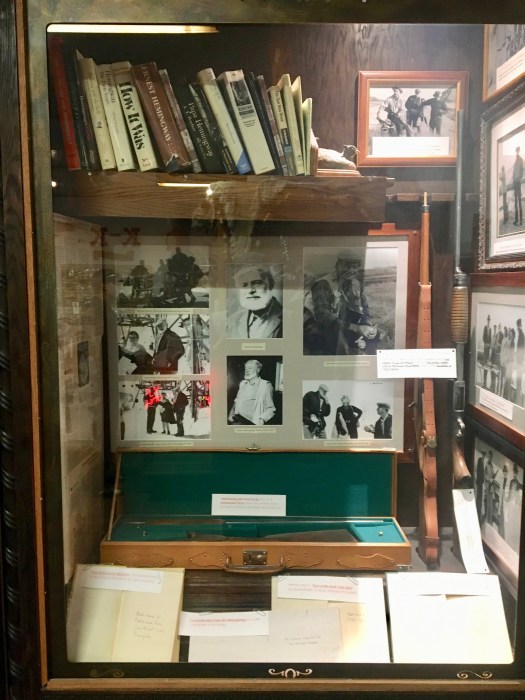
As for Silver Creek, it’s become a test of fly fishing prowess. Its clarity makes it difficult and its ties to Ernest Hemingway make it legendary–it’s Ernest’s last fishing ground and son Jack is generally credited with its preservation by the Nature Conservancy. It’s a delicate dry fly kingdom too, and in these decadent days of euro-nymphing and bobbers and droppers and whatnot that makes it special. We were there for the fall baetis and calibaetis hatch, tiny blue wing green olive mayflies and slightly less tiny blue wing green olive mayflies, but Silver Creek is most famous for early-June brown drakes, when anglers line the creek for combat fishing. We pretty much had the creek to ourselves.

Once you get off the bank and into the creek, it’s easy to wade. There are heavy river bottom weeds, but open paths of hard sand and small gravel snake through. There always seemed to be a path to where I wanted to go. I fished a 3 wt., which Rob said was about right, and Kris fished her Helios III 5 wt. We had 5X leaders, tied from a formula I cadged off of Troutbitten, though I think Kris traded hers for something less cranky. My leaders ended up closer to ten feet than nine, but when I was paying attention they turned over well enough for me, and the brown Maxima leader in the butt made them easy to watch on the water.

Was I good enough angler to fish Silver Creek? Well of course I was. Sort of. I caught fish. Lots of fish, probably 20 fish. All of them but the one rainbow I foul-hooked were circa five inches. I am the master of Silver Creek tiny browns, bright and perfect as bluegills and just as gullible. I couldn’t keep them off my baetis. Kris probably caught bigger and more fish than me. I know she caught plenty. I know she was happy.

But what the heck. I watched a lot of fish, many bigger fish, and I believed in the creek as a special place, a shrine. Clear and smooth as glass, rich with bugs, rich with fish, it’s a place that you could happily fish a season or two or ten and still learn, and that you could still happily or greedily or maybe just obsessively return to. It’s better than Wrigley, and I’m guessing there aren’t any Cubs fans. It’s just that close to perfect.

Idaho, Here We Go

Historical hand-atlas, illustrated, general & local, 1881, H.H. Hardesty & Co., Chicago.

This morning in Salmon, Idaho, the low was 52°, but the high today is 89°. When we get to Salmon next Saturday the forecasted low is 43° and the high 63°. In Houston today the low was 78° and the high 96°. I’ll dress for the arctic.

This will be our third trip to Idaho. The first was in 1992, to Stanley, a tiny crossroads jump off for Frank Church Wilderness raft trips. We weren’t there for rafting, and I’ve never really understood how we picked it. I swear it was Kris’s idea, but she denies it. We fished the Big Wood River near Ketchum, and I caught fish in the Salmon. We didn’t fish Silver Creek, or raft so this is a bit of a makeup trip.

Three years later we visited Yellowstone and fished the Box Canyon of the Henry’s Fork. We were in Idaho for about eight hours. We watched an osprey catch a fish, and caught a fish that had been punctured by an osprey’s claw. We didn’t fish the more difficult Harriman State Park. We won’t fish it this time either, and that’s ok because it’s famous for its insect hatches, and I don’t believe in hatches.

We’ll fish for rainbows and cutthroat, though there are other things to fish for in Idaho, including salmon and steelhead. Idaho seems to be one of those rare places where both cutthroat and rainbows are native. So are steelhead and salmon coming across Washington and Oregon from the Pacific. There are 39 species of fish native to Idaho, plus another 60 or so introduced species. There are six different subspecies of cutthroat trout.

That we’ve been to Idaho twice before is both a bit extraordinary and not remarkable at all: Idaho has four industries: Agriculture, mining, timber, and tourism. Out of 53.5 million total acres in Idaho, 35 million acres are public land. That means 65% of the land in Idaho belongs to me! And we’re tourists! It’s out of the way, but in Idaho we’re a major industry!

It’s public land in part because most of Idaho land isn’t really good for much except for timber, mining, looking magnificent, and the trout fishing kinds of whatnot, and in the early 1900s the agricultural interests in the southern part of the state realized that to protect water for irrigation, the lumber industry had to be regulated. Enter Gifford Pinchot and the US Forestry Service. Potatoes wouldn’t exist without large-scale irrigation, large-scale irrigation wouldn’t exist without the US Forest Service.

Lee, Russell,  Rupert, Idaho (vicinity). Potato field, 1942, Farm Security Administration/Office of War Information, Library of Congress.

Potatoes are in the eastern part of the state, and Idaho divides east/west. Idaho is where Lewis and Clark left the Missouri River drainage and entered the Columbia River drainage. In Idaho the Lewis and Clark expedition nearly starved crossing the Rockies.

Geographically Southeast Idaho is the northern reach of the Basin and Range Province that extends into Nevada, western Utah, and eastern California. That’s where the potatoes grow. The Rockies extend through 2/3rds of the Panhandle south along the Wyoming border and into British Columbia and Alberta. The Columbia Plateau, sagebrushed and arrid in the south and forested and well-watered in the north, extends west into Washington and Oregon. Salmon follow the Columbia Plateau into the Snake River basin, or at least they would except for the Northwestern dams. Fish don’t pay much attention to state lines, but they do notice dams.

Believe it or not, Idaho’s principal indigenous tribes didn’t stick to state boundaries either, but culturally they divided north/south. In the well-watered north the Kootenai, Kalispel, Coeur d’Alene, and Nez Perce–those are dubbed English names–spread into what is now Washington, Montana, Oregon, and British Columbia. They traded into the Columbia basin for salmon. In the arid south, independent bands of Northern Paiute spread into Southern Oregon and Nevada–when we fished Pyramid Lake in Nevada it was on a Northern Paiute reservation–while independent bands of Shoshone were kindred to and allies with the Plains Comanche.

Skin tepees, Shoshone, 1908, National Photo Company Collection (Library of Congress)

At Euro American contact, there were an estimated 20,000 native inhabitants of Idaho. By the mid 1800s the population had fallen to 4,000. It was the usual stuff: displacement, disease, warfare. Out of a total estimated Idaho population in 2018 of 1,754,208, approximately 1.7% or 29, 821 were Native American. I guess that’s a kind of recovery.

Idaho didn’t become a state until 1890. It sits there, way north. It’s land that’s hard to monetize and that really couldn’t be commercialized until the railroads and irrigation came, which was late. It’s pretty, but so are its neighbors, Montana, Wyoming, Oregon, Washington, Utah, and British Columbia are all pretty, and Nevada has all those casinos.

Last week I listened to a podcast of a debate among Boise’s mayoral candidates: the president of the city council was running against the current mayor–I’d surely like to know what bit of ambition and local discord set that off. There was also a nice young Hispanic veteran, and a member of a neighborhood association board who had never heard of urban sprawl. Listening to the debate, you’d have thought that the biggest concerns in Boise were (1) global warming, (2) sprawl, (3) global warming, (4) public transportation, (5) global warming, and (6) air pollution.

It was a decidedly progressive and urban list of concerns, except crime or police violence or pensions or fire department salaries or poor-performing schools were never mentioned. They never mentioned flooding or potholes either. They did mention electric rental scooters. At one point someone said that the Boise Valley was approaching one million in population. It’s not, or at least it’s approaching at a slow and mannerly amble.

Dorothea Lange, Basque sheep herder who speaks broken English coming down from summer camp with pack animals. Adams County, Idaho, 1939, Farm Security Administration – Office of War Information Photograph Collection (Library of Congress).

For such a progressive and urban list of concerns, Idaho is a decidedly Republican state, and while Idaho is growing–in 2017 it was the fastest growing state by percentage of population, 2%–the greater Boise area has fewer than 800,000 residents. In 2018 Boise itself had an estimated population of 228,790, and for all its progressive urban mayoral concerns, President Trump carried Boise’s Ada County by nearly 10%. That sounds more like Amarillo than New York City.

Of course President Trump pretty much ran away with all of Idaho, receiving 59.25% of the vote. More than 90% of Idaho’s population is white, 26% is Morman, 21% Evangelical, and those things probably aren’t unconnected. It ranks 41st in wealth per household. One supposes that back in the 80s white separatists chose Idaho as a refuge because it already was both pretty separate and pretty white. Success! Only Blaine County, the richest county that includes Ketchum and Sun Valley, and Latah County, home of the insanely liberal University of Idaho, voted for Hillary Clinton. Idaho is decidedly conservative, thought I expect the gap between the most conservative Idahoans and most progressive Idahoans is greater than most of us see in our circle of acquaintance.

Whatever its politics, Idaho is gorgeous, but there’s something unhappy about the West. I came across a list of state suicide rates, and the top ten? In order, Montana, Alaska, Wyoming, New Mexico, Utah, Idaho, Nevada, Oklahoma, Colorado. Maybe it’s the relative geographic isolation, maybe it’s the cultural streak of independence or the relative lack of social support, or maybe white malaise. The highest rates are among white males 65 and older, with 32.3 deaths per 100,000, and Native American males, with 32.8 deaths per 100,000.

Oncorhynchus clarkii
A.H. Baldwin, Oncorhynchus clarkii, West Slope Cutthroat, Evermann, B.W. and E.L. Goldsborough, 1907, The Fishes of Alaska, U.S. Government Printing Office, Washington, D.C. 

And it’s probably no accident that the principal city of Latah County is Moscow.

Illinois Playlist

What we took.

We packed to skip the baggage claim in Chicago. We flew in early on Saturday, and spent the rest of the day looking for things we’d never seen.

The only specialized fishing gear we took were polarized lenses. Our guides, Midwest Waters Anglers, provided all the gear, and it was great gear.

What I lost, Where we didn’t go.

I lost my beloved Bonefish & Tarpon Trust Yeti thermos. I really liked that Thermos.

I wish we’d had time to go to Springfield for the Abraham Lincoln Museum. We could have easily spent more time in Chicago.

What we ate.

By some measures Houston is now the most ethnically diverse city in the US, but that’s somewhat disingenuous. It treats all white people as a lump, which is like treating all Asians and Asian Americans as a lump, or treating all Africans and African Americans as a lump. Chicago’s story is in part a story of 19th and 20th century first-generation Irish, Polish, German, Italian, Welsh, and Jewish immigrants, white immigration that wasn’t from England via New England–the immigrants in The Jungle are Lithuanian. In 2019 the nativist impulse is aimed at immigrants from Mexico and Central America. In 1850 it was the anti-Catholic No-Nothings opposed to Irish and German Catholic immigration. Things never change.

Uncle Sam’s youngest son, Citizen Know Nothing, lithograph, 1854, Sarony & Co., lithographer, Library of Congress Prints and Photographs Division. American political prints, 1766-1876. From Wikipedia. He looks a lot like Lord Byron.

As of 2010, Chicago is 31.7% non-Hispanic whites, 32.9% black or African American, 5.5% Asian, and 13.3% Hispanic, and 16.1% mixed or other, but there are lots of ethnic traditions not covered in those numbers. We wanted Chicago ethnic food, and got a list of restaurants from our friend Tom, who knows these things. He said that there were three great ethnic food cities in the US, New York, Chicago, and Houston, and that the hard part of the list for Chicago was coming up with stuff we didn’t have in Houston. It’s a great list, even if we only made it to three of the places. Some of Tom’s notes are included in quotes:

  • Min Hing Cuisine – “great dim sum for breakfast (6 kinds of shrimp dumplings is good enough for me).” We went there straight from the airport. Chinese are about 1.6% of Chicago’s population, and first got there before 1860 with the railroads. The population boomed in the 1950s and 60s.
  • Parachute – “fusion Korean American, in the best way.” This place has a Michelin star, and seems to be everyone’s favorite restaurant, Alinea be damned. Make reservations in advance. We didn’t make reservations, and getting in on a Saturday night without a reservation might be harder than catching steelhead. We didn’t catch any Illinois steelhead either.
  • Shokran – “Moroccan kebabs and salads, also tangines and couscous. Cash only. BYOB.”
  • Staropolska or Lutnia Polish – About 6.7% of Chicago is Polish, with Polish the third language, after English and Spanish. We ate at Staropolska, just around the corner from St. Hyacinth Basilica. The young blonde waitress with the Polish accent was proud that it was the oldest Polish restaurant in Chicago. It could use some freshening, but that might ruin the vibe, and the food was great and the service was great.
Staropolska, cabbage rolls and potato pancakes. That red sauce seemed to be heavily paprikad, and was outstanding.
  • Jibek Jolu – “dumplings and noodles . . . Uighur.”
  • Sayat-Nova – “Armenian. Typical middle eastern fare . . . ” It was also in the middle of the Miracle Mile, and we went on the Sunday night of a long weekend when there was still plenty of shopping to be done. After some terrified driving we found a parking garage ($26 for a bit more than an hour, and well worth it). Kris loved Sayat-Nova, and said I have to ask Tom for recommendations wherever we go. I wish Tom could have helped out in Pittsburg, New Hampshire.
Sayat-Nova. Lamb meatballs in yoghurt and mint sauce.
  • Little Bucharest Bistro – “quality Central European food, excellent service.” Romanian. We didn’t go, but the descriptions on the internet were great. It wasn’t far from Staropolska.
  • Birrieria Zaragoza – “fast casual Mexican all about goat.” The Mexican population is the fastest growing population in Chicago, so it made sense to include something, but it broke Tom’s rule, sort of. I don’t know of anyplace in Houston that specializes in goat.

The best thing about ethnic Chicago restaurants? Other than the food of course. I could wear my stylish fishing clothes, the ones designed by the fashion-forward stylists at Patagonia, to any of them, which I did.

If that wasn’t enough of a list, Tom provided a supplement: “Ghareeb Nawaz Indo-Pakistani. San Soo Gob San-Korean. Galit-Israeli-Middle Eastern. Kaboobi Persian Grill (North side – our favorite). Cabra Peruvian (Rooftop restaurant). If you have time for breakfast before you leave, make it to Dove’s Luncheonette….”.

Books, Movies, TV.

There are tons of movies from Chicago, and we watched The Blues Brothers, The Fugitive, and The Untouchables. Pretty good Chicago movies. We never watched Ferris Bueller’s Day Off. I may be too old for it now.

Mostly I read about Lincoln. I wonder how he managed to govern so well without Tweets. This is a good time to ponder Lincoln, and there’s a ton of stuff out there. Sometimes we get better leaders than we deserve. Sometimes apparently we don’t.

I read Saul Bellow’s The Adventures of Auggie March. I had tried to read Bellow before, but didn’t quite get it. This time was better. I tried to read The Jungle, but found it too painful. I listened to a lot of Sara Paretsky’s V. I. Warshawski novels, but never did figure out how to pronounce Warshawski’s name, which is a weak and obscure joke about the inevitable unlikable character trope in every novel. If they can’t pronounce her name, they’re almost certainly the villain. I listened to some Dresden File novels by Jim Butcher, but didn’t think they were nearly as amusing as when I’d listened to them years ago. Michael Harvey wrote some good Chicago mysteries, and I listened to those when I got tired of the others.

Donuts.

We picked up Polish pastries at Kurowski Sausage Shop, pretzel-like crescents lightly filled with an unidentifiable jam, but I was too intimidated to brave the meat case. On Sunday morning we made a quick drive to Oak Park for Donuts at Firecakes Donuts and a quick visit to the Frank Lloyd Wright studio. The donuts were just fine, and I wish we’d had time to look at the scattered Wright houses. Next time.

There are Dunkin’ Donuts everywhere in Chicago. Chicago should do better.

Playlist.

This was a long list, so it’ll be pretty general.

Chicago’s population is 32.9% non-Hispanic African or African American. The percentage of African American population in Houston, a Southern city with significant historic black communities, is only 22.9%. For the Houston metropolitan area, Houston plus the suburbs, the number drops slightly, to 21%, but for Chicago 32.9% plunges to 17% when you add in the suburbs.

The two cities are of roughly the same size, but their largest growth occurs about a century apart. The historic African American population in Houston has its origin in slavery, but much of the dispersion from the city into the suburbs occurred after the Civil Rights Movement, and Blacks apparently moved out to the suburbs in about the same numbers as they stayed in Houston. In Chicago, the boom in African American population occurred in the great migration, from 1910 to 1960, and plenty of movement to the suburbs occurred largely before the Civil Rights Movement. Blacks apparently stuck to (or were confined to) the City.

Why this is kicking off the music playlist may not be obvious, but there is a lot of great music out of Chicago’s African American community. There are three cities most responsible for the origination of jazz: New Orleans, Kansas City, and Chicago. The earliest migration of the Blues was from the Mississippi Delta to Chicago. This is Great Migration stuff, and stuff that shaped us profoundly.

Louis Armstrong and his Hot Five, 1925, Chicago

There’s another odd thing about Illinois music, there’s a surprising number of good folk/country/Americana musicians out of Illinois. Illinois is our second flattest state after Florida, tucked in as a drainage between Lake Michigan and the Mississippi. It hides all that flatness with a combination of skyscrapers and trees. Anyway, all that flatness makes for great farmland, and except for Chicago, this is Midwest farm country. It’s no surprise that farm country makes for country music and Republican voters.

Jazz

I probably should have done better, but Miles Davis and Louis Armstrong. Armstrong’s first recordings are from Chicago. The singers Dee Alexander and Johnny Hartman, and Herbie Hancock.

Blues

Of course the Blues Brothers was set in Chicago. Where else would it be? All of these musicians were from, cycled through, wrote about, or sang about Chicago: Robert Johnson, The Paul Butterfield Blues Band, Jimmy Rogers (no, not that Jimmie Rodgers), Muddy Waters, Howlin’ Wolf, Elmore James, Little Walter, Luther Allison, Hound Dog Taylor, Jimmy Reed, Slim Harpo, Junior Wells, Buddy Guy, Son Seales, Otis Rush, Sonny Boy Williamson, James Cotton, Magic Sam, Lonnie Brooks, Earl Hooker, Freddie King . . . Is Bo Diddley the Blues? We talked about going to a blues bar on Saturday, but we’re old, things start late, and fishing starts early. Next time.

Dovydenas, Jonas,  Muddy Waters, Checkerboard Lounge, 423 E. 43rd St., Chicago; Chicago, Illinois, 1977, Library of Congress, Chicago Ethnic Arts Project Collection.

Folk/Country/Americana

John Prine, Allison Krauss, Shawn Colvin, Son Volt, Wilco, Steve Goodman.

Has there ever been a sadder song than Steve Goodman’s A Dying Fan’s Last Request? Not only was Goodman in fact dying, he was a Cub’s fan. There is nothing more pathetic than the Chicago Cubs, but it’s still one of the best baseball songs ever.

Scattered and Inconsisten Rock

In early adolescence, I thought Chicago was the greatest band ever. I liked the brass, I liked the politics, I liked the guitar. I hadn’t listened to them since. Color My World was probably the first song I learned to play on the guitar, though in my defense it was probably before it became the most important high school prom song ever written. I still think 25 or 6 to 4 was a pretty great song. Pretty good song. Ok, I still like it.

Reo Speedwagon, Cheap Trick, Smashing Pumpkins.

When Liz Phair’s Exile in Guyville came out in the 90s it got great reviews and I bought a copy, probably without actually reading the reviews. We were on a family car trip and I started the CD in the car. Some song came on, Flower? Fuck and Run? Anyway, it was really not age appropriate, either for me or my children. This trip was probably the second time I’d listened to it. It’s pretty raw in a “I grew up in Chicago suburbs and graduated from Oberlin” sort of way. It may be age appropriate for my children now, but it’s still not age appropriate for me.

Liz Phair - Exile in Guyville.jpg

Random Stuff

  • Allister, Somewhere Down on Fullerton.
  • Mobstability, Crook County (Bond Crusher Mix).
  • Rhett Miller, The El.
  • The Lawrence Arms, A Guided Tour of Chicago.
  • Andrew Bird, Pulaski at Night. Good song.
  • Common, Chi-City.
  • Frank Sinatra, My Kind of Town.
  • Graham Nash, Chicago/We Can Change the World.
  • Sufjan Stevens, Illinois.
  • Dan Fogalberg, Illinois.
  • Ben Folds, Effington.
  • Twista, Crook County.
  • Kanye West, Homecoming
  • Aliotta Haynes Jeremiah, Lake Shore Drive
  • Jim Croce, Bad Bad Leroy Brown.
  • Chicago Symphony Orchestra, Mahler, Symphony #9 in D. The Chicago Symphony Center Orchestra Hall is magnificent.

Guitar.

Didn’t take one. A guy in the airport told me that he always checked his guitar, and convinced me that I could do the same with a good enough case. Kris thought that was a great idea. Stuffing a guitar in the overhead is a pain. I got back to Houston and ordered a new case.