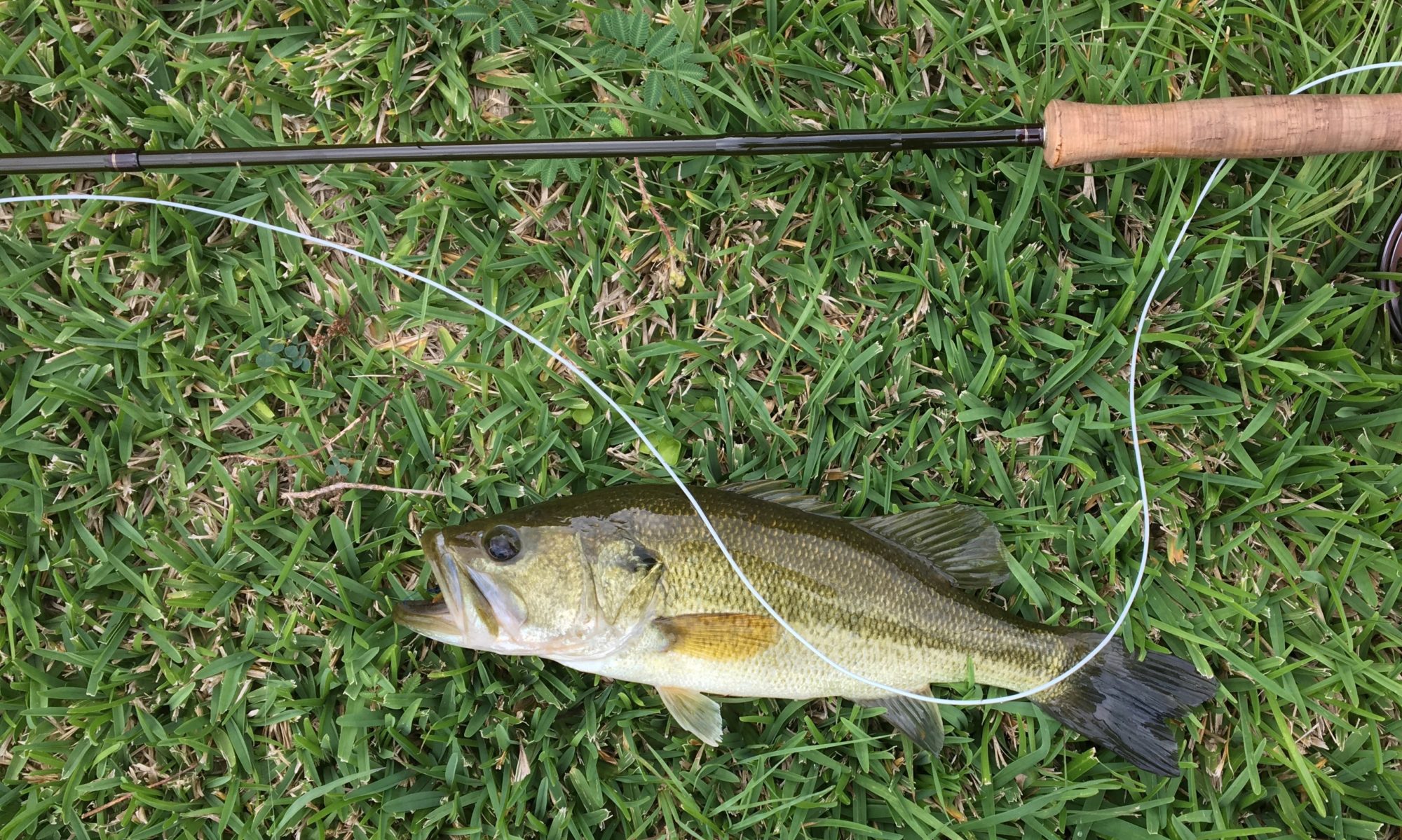
Arkansas

Arkansas seems to sit on the margins, out of sight and out of mind for most of us. Oklahoma, its neighbor to the west, has the complex history of Indian Territory to ponder, while Tennessee to the east can can always fall back on music. Texas and Louisiana to the south are their own myths. Maybe Missouri is similar, but with both the St. Louis Cardinals and the Kansas City Royals, it seems like a different world. If Arkansas were part of a family, it would be the younger brother who never quite outgrew his own self-destruction. It’s the brother with the hip flask, jobless, who spent his last dollar on a half-wild horse and a half-broken pistol. He’s the brother who shows up for Thanksgiving already contrite, but never really sorry.

Over the Martin Luther King Holiday, we drove to Arkansas, to the Ozarks. It wasn’t a fishing trip. It could have been a fishing trip, the weather was ok, but it was planned so that when I wrote the report on our Arkansas fish, I wouldn’t have to say that we didn’t go to the Crystal Bridges Museum. We made it to Crystal Bridges, and for a short stop for lunch in Hot Springs, and then came home.

Arkansas is relatively poor (currently ranked 47th in household income, trailing Mississippi and West Virginia, but ahead of Louisiana and New Mexico), and now overwhelmingly Republican. Arkansas voted 62% for Trump in 2020, and all of the Biden counties were located in the Delta, or near enough.

Tyler Kutzbach, from Wikipedia.

The Arkansas population is still pretty binary. An Arkansan is probably black or white, and more likely white than black. As of the 2010 census, 77% of the roughly 3 million population was white, while 15% was black. That’s not a very true picture though. Chicot County in the Southeast Arkansas Delta has a white population of 4,733 and a black population of 5,861. A bit further north along the Mississippi, in Crittenden County–West Memphis–the white population is 21,763 and the black population is 23,789. Flip to our destination in the far northeast, Benton County, the white population is 227,609 and the black population is 4,359. Cut to the chase: Western Arkansas is white, the Delta isn’t. According to the online Encyclopedia of Arkansas, about 100 sundown towns (and three sundown counties) existed in Western Arkansas into the 70s.

No malaria, no mosquitoes, no Negroes. Siloam Springs is clearly quite the place.

The Delta black population is a slavery remnant, brought to Arkansas for cotton. If the definition of a functional economy is an economy that provides a decent living standard and opportunity for its participants, the Delta was always a dysfunctional economy, but after World War II, as agriculture converted from labor intense to mechanized, the Delta, both in Arkansas and across the river in Mississippi, brought dysfunction to high art. Most of Arkansas’s poorest counties are located along or near the Mississippi. Post-World War II, mechanization replaced much of agricultural labor, and in the Delta no new industries provided new sources of jobs. Until the Civil Rights Act, Delta planters controlled significant political power in the state, and it wasn’t in their interest to spend tax money on education or economic development–education and economic development would challenge control of labor. Since the 1920s the largest political question in Arkansas was, as often as not, not how to fund schools but how (and whether) to pay for road improvements.

About 70% of the population of Arkansas is Protestant, which includes a vast festering range of denominational and doctrinal disagreement. Only in such places do things like drinkin’ and dancin’ and playing the pipe organ in church still seem like the major philosophical questions of the age, and the principal query among decent folk is whether you’re Baptist, Methodist, or Church of Christ, or maybe even Evangelical (though that’s skirting the edge of decency).

The United States purchased Arkansas from France in 1803, as part of the Louisiana Purchase. As with most such New World land acquisitions, the indigenous Caddos, Osage, and Quapaws weren’t consulted. By 1836, there was sufficient American population–30,000 in 1830 and 97,000 in 1840 –to have achieved statehood. I had some ancestors there by 1836, a couple of pair of many greats grandfathers and grandmothers, but like a lot of Arkansans they don’t appear to have been particularly successful. One pater died young in 1850, and the other was in Texas by 1846. It is so common for white North Texans’ ancestors to have passed through Arkansas, that Ancestry recognizes a distinct DNA group, West Tennessee, Arkansas, and Northeast Texas Settlers. According to Ancestry, them’s my people.

Arkansas Territory, 1819, Arkansas Digital Archive

In the War, as part of the Union push to control the Mississippi, the Arkansas Confederacy was dealt with and survived only in the southwestern corner of the state, with the capital at Washington, 33 miles from Texarkana. In a later stage of the War, the Little Rock Nine were escorted into Central High in Little Rock in 1957.

Along with the Little Rock Nine being escorted into Central High, perhaps the most enduring image of Arkansas is the Arkansas Traveler/Lil’ Abner hillbilly. Lil’ Abner was not clearly from Arkansas, he hailed from Dogpatch, USA, but did anyone doubt that the Ozarks was his home? As for the Arkansas Traveler

Oh, once upon a time in Arkansas,
An old man sat in his little cabin door
And fiddled at a tune that he liked to hear,
A jolly old tune that he played by ear.

Edward Payson Washbourne, The Meeting Between the Traveler and the Squatter, 1856.

Hillbilly is not a flattering designation, combining squalor, meanness, poverty, and ignorance, though The Arkansas Traveller does allow the old man superior practicality along with tunefulness. “Neighbor, why don’t you fix that roof?” “I can’t fix it now ’cause it’s raining, and when it ain’t raining it don’t need fixing.” In the modern age you can toss in the assumptions of opioid addiction and meth.

In recent years, Arkansas points to three corporations as signs of economic change, Walmart, Tyson Foods, and J.B. Hunt Transport Services, all located in Northeast Arkansas. I can’t judge whether cheap goods, cheap chicken, and big rigs is the world on a platter for Arkansas, but it can’t hurt. I will say that Tyson produces the best commercial bacon, Wright Brand, and when I don’t cure my own it’s my go-to.

Tourism also plays a part in Arkansas’s economy, and Western Arkansas, up the Ouchitas to the Ozarks, is beautiful. All those bad things you can say about Arkansas? Western Arkansas is beautiful, truly, spectacularly beautiful.

Back to the new Crystal Bridges Museum of American Art. Our drive up the Ouchitas to the Ozarks wasn’t a fishing trip, exactly, though we did take rods, the weather was good, and we took a quick look at the White River. It was more of a pre-fishing trip, so that we wouldn’t have to say we’d never been to Crystal Bridges. The Museum collection is a good survey of important American art, but nothing in itself to drive 600 miles for. The real draw is the setting and the building, designed by Moshe Safdie. Together they’re magnificent. Crystal Bridges was founded by Alice Walton, Sam Walton’s daughter, in 2011, and there is a bit of a Medici feel to the enterprise. Here are some of the principal donors:

There’s something to be said for cheap goods, cheap chicken, and big rigs.

Happy New Year! Late! 2021.

2021 begins our fourth year of chasing fish around the country. What a difficult year the third year was.

The kitten we found bass fishing. She wasn’t bass fishing, we were, and she had been dumped on the roadside. Somebody doesn’t know what they lost.

At the start of 2020, we had a great steelhead trip to Washington State, right on the cusp of the Covid outbreak, right when the first US cases had been identified in, you guessed it, Washington State. I remember seeing a young Asian woman in a face mask in the Seattle airport and thinking, isn’t it a bit over the top wearing face masks? Is that some Asian thing? Who knew it would turn out to be not an ethnic question but an ethics question.

We had a couple of trips to Kansas, one early in the year when it was freezing, and one late in the year when it was freezing. I think next time we’ll go to Kansas in the spring, when the tornadoes blow in. As I a child of the Plains I always loved going to the storm cellar when the storm siren blew. All the neighbors would come over and sit around in the semi-dark, in the dank crypt-like smell of the underground. There were almost certainly spiders. It was a fine old time.

We nymphed in Tennessee, and we nymphed in North Carolina, and we caught some redfish on the Texas Coast and some bass in local ponds. That was all good, but with Washington it only meant three new states, plus we still have to return to Kansas. We’re never going to finish at this rate. We’ll have to fish in the State of D.C. if we don’t hurry.

2020 had a pandemic, and also George Floyd’s death in Minneapolis. Someone asked me during the Floyd fallout if I thought there was institutional racism. I said yes, but thinking about it later I’m not sure it’s the right question. We share some pretty tragic civic history, from slavery to voter suppression to Jim Crow, and it seems to me the question is whether we can conclude that George Floyd’s death isn’t a continuation of that history. I suspect that if I were black my response would be yep, just more of the same old, this time from the Minneapolis police.

Personally in November and December I went through two months of radiation for prostate cancer, old man cancer, and the radiation left me randomly falling asleep, then I would sleep some more, and then sleep some more. The doctor told me to think of it as a day at the beach. Since I had to go in most days, it was a pretty lousy couple of months for fishing, even surf fishing on the the beach. I hope the radiation worked, but in any event it didn’t leave any side effects, except that now every time I stand up I immediately need to go pee. It’s going to be a pain in waders.

This is not a flats boat.

There was an election, nothing new, with claims of voter fraud, nothing new, and a violent insurrection at the capital that left five people dead, which technically happened in 2021, not 2020, but it felt like 2020 and it was certainly something new. I just wish we still had Mark Twain. Mark Twain could explain this nonsense to us. This nonsense deserves Mark Twain.

As for me, it’s just not plausible that the Democrats could pull off massive fraud without somebody telling their buddy at work you should have seen what I did today! I cast a million votes for Joe Biden! Ex-wives, ex-girlfriends, Deep Throat in parking garages, the Pentagon Papers, that whole raft of Donald Trump ex-advisor porn, Chelsea Manning, J.K. Rowling’s lawyer, Mike Fiers . . . The only reason the Qanon drivel gets traction is because it’s supposedly being leaked by an insider who can’t keep his mouth shut. At least that part , somebody not keeping their mouth shut, is believable. If there had been a massive conspiracy to falsify millions of votes, some conspirator would certainly have said something to somebody who would need to tell the rest of us, and Rudy Guiliani doesn’t count. Somebody is going to blab. Hell, I’ve just told you about my glow-in-the-dark prostate, which is really none of your business, and even worse, an imposition by me on you. I didn’t cast a million votes for Joe Biden, but if I had, you’d almost certainly know by now.

Kris on the Guadalupe

What’s worse, it’s the sort of thing one shouldn’t claim blithely, without hard evidence, and no, that bogus statistical study that concludes if the vote had been the same in 2020 as it was in 2016, Biden couldn’t have won. True enough, but stupid. That’s why the game’s played on the field. Claiming conspiracies without evidence, Sidney Powelling it, will likely get you sued, and worse, it’s a direct attack on democracy, and pretty sketchy under the Ninth Commandment as well. It’s why except for Texas Attorney General Ken Paxton none of the lawyers would go into court and say there was fraud; for a lawyer, lying to a court has consequences.

There are always irregularities in elections, elections are hard to run and unless you can show that the irregularities affect the outcome, it’s just noise. There may have been some noise in 2020, but there was no massive fraud. It would have shown up in court if there had been.

Meantime Happy New Year. We’ll all go fishing in 2021! We’re scheduled to go to Pennsylvania in May, and I think we’re going. Hopefully by then we’ll be vaccinated. We may drive to Arkansas tomorrow, and as long as there are plenty of places to pee on the route, that should be just fine.

This is a flats boat.

What’s the Matter with Kansas, Part 2, October 16-19, 2020

Here’s a tip. If it’s in the 30s and the wind is blowing hard, and you pull into a Kansas campsite at 11 at night, angry with each other because of the wrong turn you made on the farm road, and because you couldn’t decipher the instructions at the park self-pay station, and because your companion doesn’t believe that this is the right campsite (or that if it’s not screw it, it’s a campsite); and you agree you’ll just sleep in the front seats of the van because it’s cold and dark and blowing and setting up the tent is just more than you can manage, well here’s the tip: when your companion says should we get out the sleeping bags? Say yes, and do it. The car seats will be ok, they recline and you’re exhausted, but by a few hours after you park, the inside of the van will be as cold as if there was no van at all. I froze all night, and woke with one of Kris’s sweaters wrapped around my feet, with a towel wrapped around my legs, and with a small dog snuggled for warmth as close as it could get.

Here’s a second tip. If you decide at the last minute to take the wee dogs along, and the wee dog who sticks by you is not the clean living chihuahua but the miniature schnauzer that daily collects a new layer of oily dirt and dog smells, give the dog a bath before you go. Sure, she’s a sweet dog, but after two days with the dog sleeping near you for warmth, three weeks later you’ll still conjure the smell of that dog. It was bad enough the first night, sleeping loose in the car, but the second night when it got really cold, the dog and I shared my technical skin-tight ultralight Mountain Hardware down mummy bag. In that bag there’s barely space for me, much less a schnauzer, except (because she was shivering) right at the neck. To make space for the schnauzer, I left the neck of the bag unzipped. My schnoz and that schnauzer shared too much space for too long.

Just give the dog a bath. Slightly rancid schnauzer is a smell that lingers. Take the time and give the dog a bath.

Mead State Park is not on anybody’s must-see list, but it’s pretty. In warmer weather it would have been a lot of fun to fish. There were shallow flats where in summer the bass and sunfish would cluster, except that the cold nights sent the bass and sunfish into shock and deeper water and they were nowhere to be found. There was bird life, and Kris got plenty of photos, flickers, eastern bluebirds, redhead ducks . . . The park was also packed with RVs, while we had the only tent. When we got back I asked my friend Schoonover whether he had an RV, and he said I’m old and white, of course I have an RV. I guess I’m supposed to have an RV.

We have a newish tent, and a newish propane stove. I’ve got all the backpacking gear in the world, but I bought the new tent and stove for car camping. Here is another tip, or at least an insight. When you wake up in the morning and the temperature has plummeted below freezing, you’re going to be jealous of those people with RVs. It’s hard to pack camp with numb fingers.

The dogs sat in the car and were no help at all with the packing.

There’s nothing wrong with cold I guess, and after the first cold night we had one extraordinarily beautiful day followed by an even colder, windier night. The next morning after breakfast it was overcast and spitting rain so we threw stuff into the car and drove around southwestern Kansas, to Dodge City and the Cimarron National Grassland. At 5 that afternoon, after it never warmed, we drove home, across the Oklahoma Panhandle, down through the Texas Panhandle, and then east and south to Houston. We drove through the night and got home the next morning by 9.

I was the only fly fisher at Mead Lake, but there were conventional anglers, and they weren’t catching anything either. I did have a safety plan. There’s always a spillway, and at the bottom of the spillway a bit of water where you can find sunfish. I was going to fish the Mead Lake tailwater! Here was the Mead Lake spillway. There weren’t any dry-land sunfish.

Mead Lake gets stocked with trout on November 1, and at dusk Saturday, in the prettiest light in the world, we watched rise forms across the center of the lake. I’d brought a sit-on-top kayak, the kind where sit-on-top actually translates as sit-in-a-puddle, and I tried to fish the rise. I don’t know what the fish were, maybe sunfish, but I’m half convinced it was early-stocked trout. I fished a small streamer, and got a tug, and got enough of a hit to see a quick flash of silver before the fish came off the hook, but I should have thrown out a foam beetle and let it sit. Even fishless though, it was pretty, and I fished until dark.

Here’s a fourth tip. In October Kansas gets cold, and the wind blows. Maybe June’s the time to go to Kansas.

What’s the Matter with Kansas, Part 1, October 16-19, 2020

I’ve been busy this fall with work and other things, so even without the coronavirus, there have been reasons not to travel. We’ve fished for bass in freshwater and redfish in salt, but since early August all of our fishing has been close to home. I’ve studied maps, and concentrated on where we could reach driving. I’m not ready for airplanes, but I still want to fill in blanks.

And there are blanks to fill reasonably close to home. There are adjacent states I’ve been saving, Arkansas and New Mexico, and states a bit further that we can drive to without too much effort: Georgia, Kentucky, Missouri, Colorado, and Arizona, maybe South Carolina, maybe Utah. With the exception of Kentucky, I’ve been to all those states before, even if I haven’t been there to fish. What’s the point, though, of finally making it to Kentucky if I can’t visit distilleries? And New Mexico, one of my favorite places, requires visiting Texans to quarantine. Colorado is on fire. Then there’s Kansas, which is a peculiar problem that demands particular attention.

I can’t find a fly-fishing guide in Kansas, and I’ve spent hours on the internet looking. Over the summer I thought I’d finally found one, Paul Sodamann at Flats Lander Guide Service, so I called Paul. He’s a FFF certified fly casting instructor, and he’s taught a fly-fishing course at Kansas State, but he told me he’d stopped guiding. Zebra mussels have infested his local waters, and while the carp were still there, the mussels have so cleansed the water that the carp see you coming. Carp are spooky, and in the clear water he says there’s no reliable approach to spooky fish.

Zebra mussels and carp: America’s heartland has been invaded. See? Kansas is a complicated place.

Since I can’t find a guide I’ve focused on the least-populated Kansas places, and I will tell you there are plenty of least-populated Kansas places. In 2019 Kansas had an estimated population of 2,913,314, with 104 counties, and an average population density of 35.4 people per square mile. That’s a lot of land, and not a lot of people. And the population is not spread evenly. The ten most populous counties represent about 65% of the population, while the 65 least populous counties represent only about 10% of the population. There’s some weird symmetry in those numbers.

After map study we settled on the Cimarron National Grassland which is as far south and west as Kansas goes, with a stop at Meade State Park, an 80-acre lake just over the Oklahoma border, about an hour south of Dodge City. Meade State Park is 641 miles from Houston, or a roughly 12-hour drive. Cimarron National Grassland is about two hours further west, with a side trip to get the hell into Dodge. The description of Meade was of a good warm water lake, with bass, catfish, and sunfish. The descriptions of Cimarron said it had ponds, with bass, catfish, and sunfish.

Cimarron is in Morton County, Kansas. Morton County, Kansas, population 2,539, is not the least populated county in Kansas. That honor goes to Greeley, population 1,232, two counties to the north. Out of 104 Kansas counties, Morton ranks 91st in population. Urban as it is, one wonders, how do 2,539 residents support the communal things people need? A sheriff? A doctor? a high school football team? a high school?

It’s probably no surprise that Western Kansas is flat and rural, and that it doesn’t sport a lot of water or trees. The Cimarron Grasslands is located on the Cimarron River, which in Kansas is an intermittent stream, dry for most of the year. It was dry when we saw it. Even Middle Springs, a dependable watering hole on the Santa Fe Trail, was dry. Semi-arid, this is wheat country that depends on rainfall and aquifer irrigation, and every 15 or 20 miles along the highway there is a community with a co-op grain elevator, a farm supply, and a cafe. My friend Clark, a Nebraskan trained as a city planner, once explained it to me: the farming frontier communities are spaced by how far a pre-automobile farmer could reasonably travel to get to market and home again in a day.

Western Kansas is beautiful, but I may be unnaturally drawn to flat and sparse. It’s also In Cold Blood territory. Writers who trade in horror and violent confrontation should be drawn to Western Kansas. There’s nothing like isolated farmhouses to spur that creepy distrust of the stranger. But sparse as it is, isolated as it is, it’s not wild. This is industrialized agriculture, and everywhere there is evidence of cultivation and the massive machines and infrastructure that make it possible. In Western Kansas there’s rarely even the faux wilderness of uncultivated pasture. Every acre seems farmed. This is grain country, exactly what Kansas is supposed to be.

In 2016, Morton County voted 83% for President Trump, which is also what Kansas is supposed to be, and there was strong support of the President all along the highway. In every community there were Trump signs in yards and at businesses. At farm gates there were Trump flags. In contrast, yesterday morning on my run I counted 12 Biden/Harris signs in five blocks. Kansas was just like my neighborhood, but in reverse. instead of five blocks its political uniformity spreads across hundreds of miles.

On the drive from Houston I re-listened to a lecture by Thomas Frank, What’s the Matter with Kansas, based on his 2004 book of the same name. I haven’t read the book, and the lecture isn’t so much about Kansas as it is about conservative voters generally, with Kansas appearing mostly in the title as a bit of shorthand. If I follow the lecture correctly, the right on the left side of Kansas is no longer driven by economics; those Trump flags aren’t out there because of fiscal conservatism, but because of cultural divides. The Kansas Trump voters are now driven by anti-abortion, anti-gay, anti-antifa, and anti-whatever, not economics.

Maybe there’s some truth to that, but I suspect Mr. Frank misses part of the point of all those miles of wheat fields. Farmers are business owners, and the people who work for them and depend on their trade are deeply tied to the success or failure of their business. I’d guess their political convictions were developed more from Jimmy Carter’s 1970s inflation, followed by the 1980 Russian grain embargo, than from any deep seated dislike of what’s happening culturally in Chicago or Denver or Dallas, or for that matter Wichita or Amarillo. As much as there is to admire about Mr. Carter, he didn’t do much for Kansas farmers, and I’d guess 40 years on Kansas farmers still see government generally and Democratic government in particular as less a help than an intrusion, or a ruination.

This corner of Kansas was also the heart of the Dust Bowl, and Cimarron National Grasslands only exists because of government intrusion in the 30s, when a bit more than a hundred thousand acres of environmentally ravaged land was purchased by the government to add to the national forests, sans trees. Even in the photo above, the trees are imports, not natural parts of the landscape. There are also bits of the national grassland throughout the dustbowl plains, in Colorado, Kansas, and Texas, and it’s held as grassland in part to protect against a repeat of the Dust Bowl. In the urban mind, those Kansas farmers are always less cognizant of their dependence on the government aid they receive than they should be.

Meanwhile, we traveled to Morton County, Kansas, to fish. We may well be the only people hereabouts who can say that. We drove about 1400 miles and I didn’t catch a fish, not a bass, catfish, nor sunfish. Not a one fish, two fish, red fish, nor blue fish, of either the Republican or the Democratic variety. At least I get to think more about Kansas. What’s the matter with Kansas? We didn’t catch a fish.