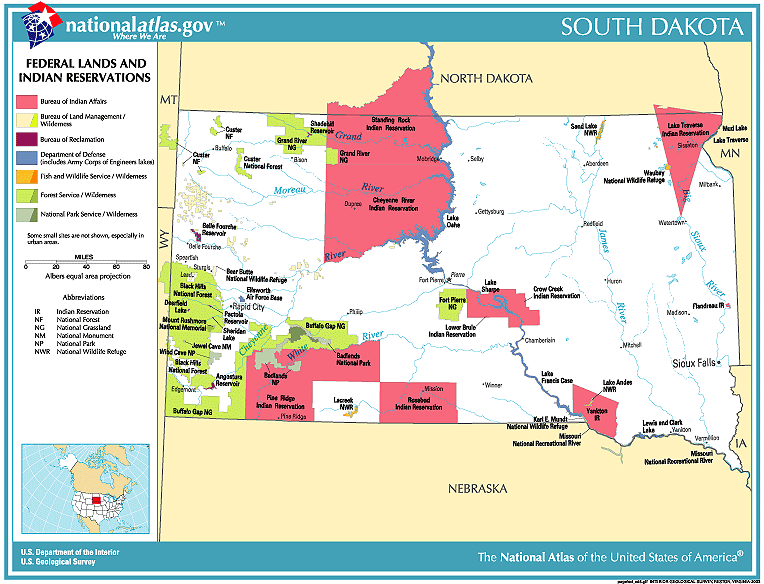

It’s 346 miles from Thermopolis, Wyoming, to Rapid City, South Dakota, with detours for the Crazy Horse Monument and Mount Rushmore, and also for cheese enchiladas in Gillette, Wyoming.
The cheese enchiladas were at Los Compadres Mexican Restaurant, and they were perfectly decent Tex-Mex, that glorious bastardization of borderland Texas and Mexico that is a Texan’s comfort and joy and Diana Kennedy’s horror.1 It’s a commonplace that you should never trust Tex-Mex north of Dallas, which is actually too far north for my taste, but I liked the Los Compadres enchiladas, even as far north as Wyoming, and there was a patio where Roo could stand guard while we ate. I even got to practice my Spanish, at least as far as buen día.2


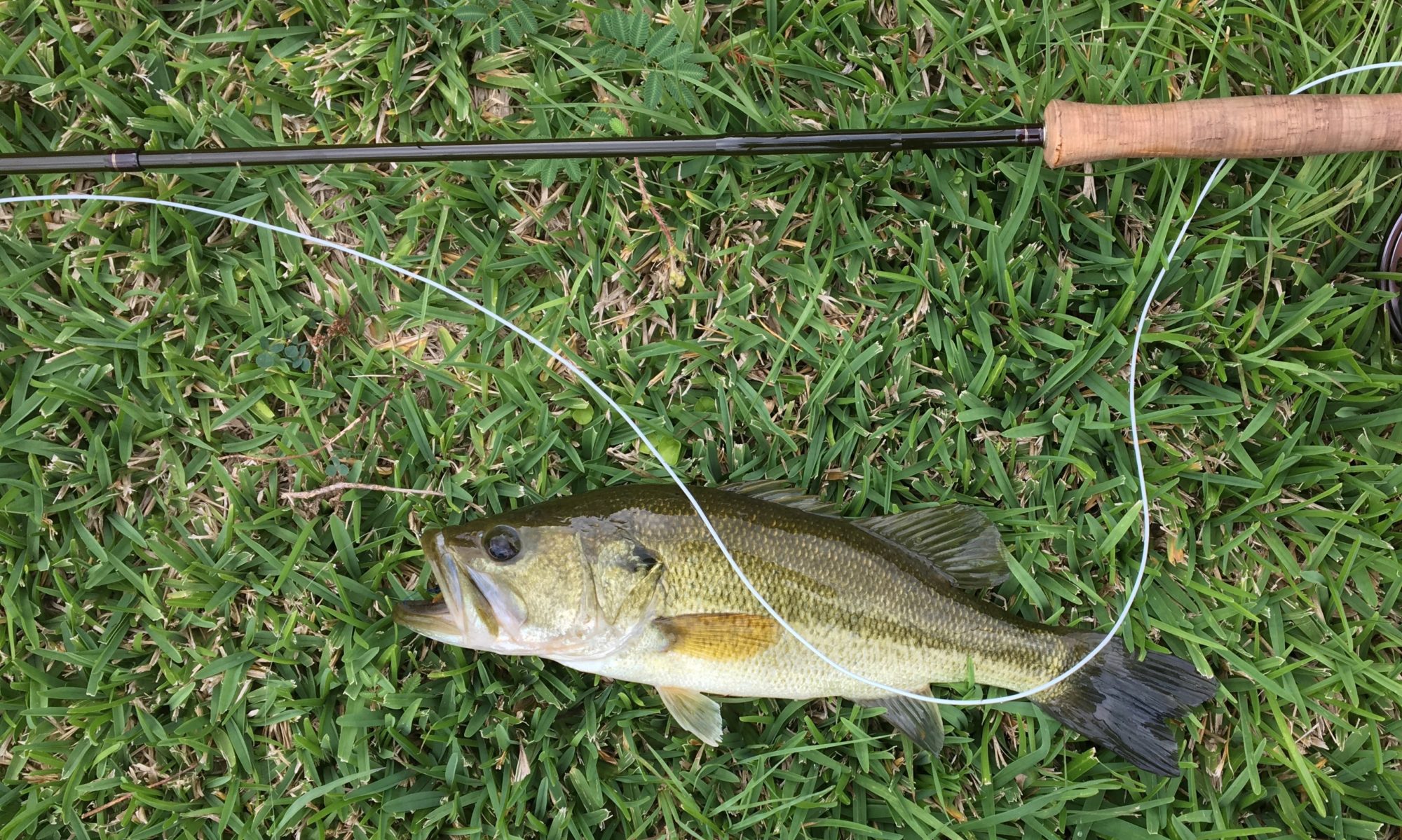
In South Dakota we fished two days in the Black Hills on Rapid Creek. We fished with David Gamet of Dakota Angler in Rapid City. David was great to fish with, younger than us, but not young enough that we felt like we were being bossed around by our children. He had grown up in the Black Hills, and there was no doubt about his bona fides.
There were rainbow trout and brown trout, but unlike in Wyoming, the browns and rainbows didn’t displace native cutthroat. One of the peculiarities of the Black Hills is their geographic isolation, with the prairies of South Dakota to the right and the prairies of Wyoming to the left, and without connecting trout rivers for trout to migrate. Illegal European immigrants3 had to bring in the trout, and before that there were none.
There are now trout in New Zealand and South Africa, India, Tasmania, and Australia, none of which held trout until the English came with their craze for trout fishing. All of those trout were invasive species brought along as part of the English diaspora–I’m thinking that anyone of English heritage (or Scots or Irish) shouldn’t complain too loudly about immigration. Just follow the trout. And the pheasants. And you can add South Dakota to the list of places where neither trout nor pheasants were but now are.

Having myself inherited the English craze for fly fishing, the Black Hills are a delightful place to fish for trout. The water is too small for drift boats, so you have to work a bit, but for small water the trout seemed uniformly decent-sized–not as big as Wyoming, but close enough, and in memory growing ever larger. Rapid Creek is shallow riffles punctuated by deep holes, and the challenge is to find water deep enough to hold fish, and then cast from a place where the trout can’t see you.
But you need to see the trout. We would sneak up on the deeper, greener water, peer into the pool while David said there, there, look there . . . And then if I was lucky I would see a fish, and then another, and then another, no more than a darker space in the deeper water, holding in place while I watched until it would gently drift a few inches to one side or the other to feed.

Looking at the photos, I’m surprised again at how shallow the water was. In the deepest pools it might have been waste deep. It made the discovery of such good fish so startling. Honestly though, even without the excuse of a fly rod, it was fun just to walk into the water. There is something so childlike about it, like petting a dog, riding a bicycle, watching a cloud . . . In the movie, A River Runs Through It, in the last scene, the old man is on the river threading a fly onto the leader, and you know exactly what he is thinking–this is me, after all that history, I am still the child whose father believed in the Presbyterian God and fly fishing, and it’s not memory, at least not merely memory. While standing in the water that old man knows that at least somewhere inside he is still that child.
Because David knew the water so well fishing with him felt like cheating–he knew where the holes were already, and would lead us from place to place, often circling around the stream to approach as stealthily as possible. It’s another commonplace that if you can see the trout they can see you, too, and that seeing you will put them down. David picked our flies, of course–what do we know of trout flies?–but it was basically the same trico nymph formulation that we had used in Wyoming. Like Wyoming, we were told the bigger surface hatches of larger mayflies happened in May, not June, and that May was when we could expect to successfully fish dry flies. Now mind, I’m still not convinced that hatches exist, and that they’re not a ruse to dupe gullible Texans, but I would love to fish dry flies with David during a Black Hills mayfly hatch. I might even catch a fish.
We fished a full day the first day and a half day the second. The second day we considered fishing Spearfish Creek in Spearfish Canyon, but stuck to a different part of Rapid Creek because it was a long drive to Spearfish. We were fishing through the morning into the heart of the day both days, but on our full day we quit early because of the water temperature. It’s hard to catch fish once the water approaches 70°, and the lower oxygenation of warm water makes it hard for the trout to survive if they’re caught. This was June, and I had planned the trip for when I thought the water would still be cold. Maybe we’re just more conscious of water temperatures than we used to be, or maybe water keeps getting warmer earlier and earlier.

One of our favorite discoveries was the Driftless Region, the geological anomaly where Iowa, Minnesota, and Wisconsin come together, and where for some reason the glaciers failed to flatten the landscape. The Driftless is on roughly the same longitude as the Black Hills, and a few hundred miles east. It’s surrounded by farmland, not mountains. Like the Black Hills, the trout streams are small, and both places involve walking and wading, not boats. The fish that we caught in the Driftless were smaller.
But both places, the Driftless and the Black Hills, have pretty, manageable water. They are similar sized regions open for exploration, and both have trout. I am not much of a trout fisherman, but trout are such great fish for a fly rod. While we fished in South Dakota, I kept comparing the Driftless and the Black Hills, and I finally decided that I liked fishing in South Dakota and the Driftless as much as any of the places I’ve fished.
I will say that while the scenery probably has the edge in the Black Hills, the cheese is better in Wisconsin.

- Diana Kennedy (1923-2022) was the leading authority writing in English on interior Mexican food, and wrote nine cookbooks which are as much anthropology as cookery. She famously despised Tex-Mex and Cal-Mex as foreign goop, but later writers properly consider them authentic borderland cuisines of greater Mexico. After his success with the Gulf of Mexico, President Trump will presumably redesignate Tex-Mex as Tex-American, and Ms. Kennedy will smile from heaven. ↩︎
- Writing this, I finally looked up the difference between buen día (which is singular, but that’s not the difference), and buenos días (which is plural, but that’s not the difference). “Buen día” is more formal and means “good day.” It can be used any time during the morning, afternoon, or evening. “Buenos días” literally means “good days,” but is used as “good morning.” It’s more common than buen día, but is only used in the morning. Buenos días for the morning, buenas tardes for the afternoon, and buenas noches for the evening and night. Buen día is for any occassion when the sun shines. ↩︎
- See the description of South Dakota. The US violated its 1868 treaty with the Sioux in 1874 by sending Custer to explore the Black Hills. After reports of gold leaked from the Custer expedition, the Black Hills were illegally flooded by prospectors with gold fever. The US then wrongfully took possession of the area in violation of its earlier treaty. See United States v. Sioux Nation of Indians, 448 U.S. 371 (1980). ↩︎